Illustrative image generated for this article.
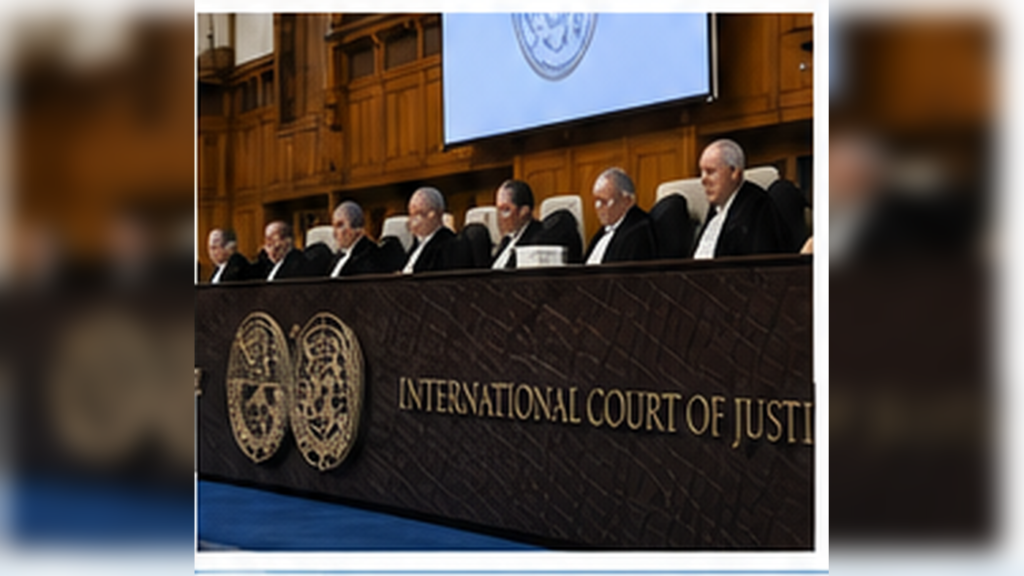
Germany is defending itself at the International Court of Justice, or ICJ, against a case brought by Nicaragua over Germany's military support for Israel. Nicaragua says Germany is helping actions that violate the Genocide Convention and international humanitarian law in Gaza. Germany strongly rejects the accusation. The case is being heard in The Hague in the Netherlands and has attracted international attention because it connects the Gaza war with questions about the legal duties of countries that supply weapons to another state.
The ICJ is the main court of the United Nations for legal disputes between countries. It is different from a criminal court. It does not put individual soldiers or political leaders in prison. Instead, it decides whether states have broken international law and what legal duties they have. Nicaragua argues that Germany, as a major supplier of arms to Israel, has responsibilities under the Genocide Convention. Germany says the claims have no proper legal or factual basis and is challenging whether the court should continue to hear the case.
Germany has been a strong supporter of Israel for many decades. The relationship is deeply connected to Germany's history and the Holocaust. Germany says Israel has a right to defend itself after the Hamas attacks of October 7, 2023. At the same time, the war in Gaza has caused a very large number of Palestinian deaths and huge destruction. This has created difficult questions for countries that support Israel. They must consider security, humanitarian law, civilian protection, and the conditions attached to military exports.
Nicaragua first brought the case in 2024. It asked the court to order Germany to stop military and other aid to Israel as an emergency step. The ICJ did not grant that request, but it also did not end the full case. The legal process has therefore continued. The current hearings focus on Germany's objections, including questions about whether the court has the authority, known as jurisdiction, to decide the case. Cases at the ICJ can take years before a final decision is made.
Israel is not a party in this particular case between Nicaragua and Germany. Israel strongly rejects accusations that its military actions amount to genocide. Separate legal proceedings involving Israel have also taken place at the ICJ. This can be confusing because several international courts are involved in events connected to Gaza. The International Criminal Court, or ICC, is a different institution that deals with possible crimes by individuals. The ICJ deals mainly with legal disputes between states.
The German case is important beyond the two countries in the courtroom. Many governments sell weapons, military equipment, or security technology to allies. If courts give clearer rules about when a supplier country can be responsible for how those weapons are used, the result could influence future arms-export decisions. Governments may need to review risks more carefully, create stronger controls, or stop some exports if they believe international law could be broken.
For now, the court has not decided the main question of whether Germany violated international law. The judges must first consider Germany's legal objections and the arguments from Nicaragua. The process will continue while the situation in Gaza remains a major international issue. The case shows how modern wars are fought not only on battlefields but also through diplomacy and law. Whatever the final judgment, the hearings are likely to shape the global debate about arms sales, civilian protection, and the responsibility countries have when they support military partners. Legal experts, governments, and human-rights groups will study each decision closely because it may influence how other countries judge the risks of sending weapons during future conflicts.
07 U.S.

U.S.-Iran Strikes Near the Strait of Hormuz Raise New Fears for Global Oil Supplies
Nepal Flood Disaster Leaves More Than 1,300 Dead as Thousands Remain Missing
Anak Krakatau Eruption Shuts Seven Indonesian Airports and Disrupts Thousands of Flights