Illustrative image generated for this article.
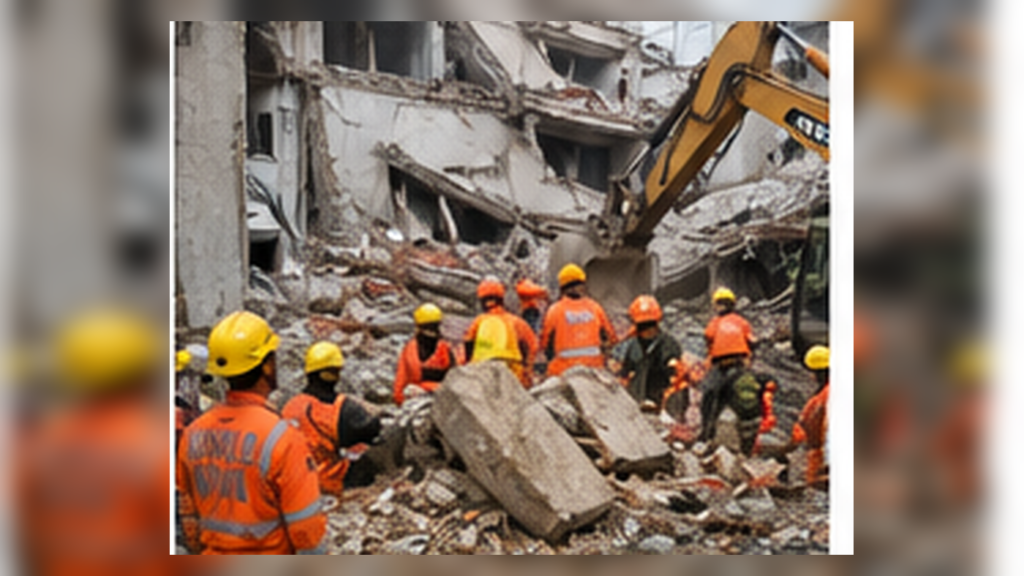
A five-story building collapsed in New Delhi on Sunday, killing at least one person and trapping dozens of others under broken concrete and debris. The building was being used as a boys' hostel in Satya Niketan, a busy neighborhood known for student housing near a Delhi University campus. Officials said around 30 to 40 people were believed to be trapped. Police, firefighters, and disaster-response teams worked through the rubble while heavy machines moved large pieces of debris.
Some of the trapped people were able to make phone calls for help, which gave rescuers important information about where survivors might be located. Officials said teams had already pulled some people out, while at least two injured people were taken to hospital in critical condition. Rescue work after a building collapse is slow and dangerous. Workers must remove heavy material without causing another part of the structure to fall. They often use cameras, listening equipment, dogs, and careful hand digging to search small spaces.
The cause of the collapse was not immediately known. Investigators will need to study the building's design, age, maintenance, construction materials, and any recent work that may have changed the structure. They will also look at weather conditions. New Delhi is in the June-to-September monsoon season, when heavy rain can weaken some older buildings. Water can enter walls, foundations, and soil. If a structure already has problems, long periods of rain can make the danger worse.
Satya Niketan is a crowded area with many students who rent rooms close to colleges and universities. In neighborhoods like this, demand for housing can be very high. Owners may divide buildings into many rooms or add extra floors to create more space. Authorities in Indian cities have often faced challenges with illegal construction, old buildings, and weak enforcement of safety rules. It is too early to say whether any of those problems were connected to this collapse, but they will likely be part of the wider public discussion.
For families, the waiting is one of the hardest parts of a disaster. Relatives may stand near the rescue area for hours without clear information. Rescue officials must work carefully and cannot always give quick answers. Hospitals also prepare to receive people with crush injuries, broken bones, breathing problems, and dehydration. People who survive under rubble may need treatment even if they do not have visible injuries because heavy pressure on the body can cause serious medical problems.
Building safety is a major issue in fast-growing cities around the world. As more people move into urban areas, the need for low-cost housing increases. Governments must balance speed, price, and safety. Strong building codes are important, but the rules only work when inspections are regular and honest. Older buildings may also need repair, especially after years of rain, heat, pollution, or changes made by owners. Public awareness can help residents report cracks, leaning walls, or other warning signs before a disaster happens.
The rescue operation in New Delhi will continue as long as officials believe people may still be alive. The death toll could change as teams reach deeper parts of the rubble, so early numbers should be treated carefully. The most important goal is finding survivors as quickly and safely as possible. Later, investigators will try to explain why the building fell and whether anyone failed to follow safety rules. For now, the collapse has brought fear and sadness to a student neighborhood and renewed concern about the safety of crowded urban buildings during the monsoon season. City officials may also face new pressure to inspect hostels and older buildings more closely before another emergency occurs.
09 MIDDLE EAST

U.S.-Iran Strikes Near the Strait of Hormuz Raise New Fears for Global Oil Supplies
Nepal Flood Disaster Leaves More Than 1,300 Dead as Thousands Remain Missing
Anak Krakatau Eruption Shuts Seven Indonesian Airports and Disrupts Thousands of Flights