A country in mourning
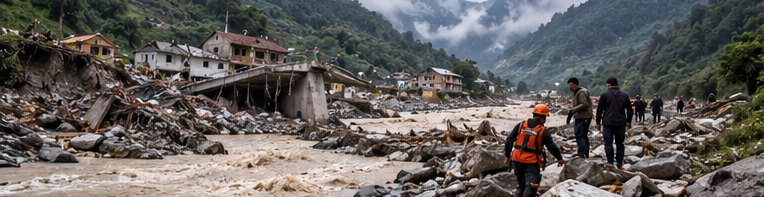
Nepal has held a national day of mourning after catastrophic floods killed more than 1,300 people in Nepal and Tibet. Thousands of people are still missing, and families are waiting for news about relatives who disappeared when rivers rose suddenly on August 26. The disaster has become one of the deadliest flood events in the region in recent years.
Government offices in Nepal lowered their flags as families completed traditional mourning ceremonies. Nepal is mainly a Hindu country, and many families observe a 13-day mourning period after a death. On the final day, relatives often hold special prayers and rituals for the person who died. For families whose loved ones are still missing, the situation is especially painful because there may be no body to bring home.
Some families held symbolic funerals. This means they carried out funeral traditions even though the missing person's body had not been found. For many people, this can offer a small amount of peace after days of uncertainty. However, it does not end the search for answers. Relatives continue to ask rescue teams and government officials to do more.
The floods hit mountain areas where rivers can change very quickly. Heavy rain and sudden flows of water can move rocks, trees, soil, and parts of buildings. Roads and bridges may disappear in minutes. In narrow valleys, floodwater can become very powerful because there is little space for it to spread.
The rescue and recovery challenge
One of the major concerns is the large number of workers who were near hydropower projects. Nepal uses mountain rivers to produce electricity, and many power plants, tunnels, and construction sites are built close to fast-moving water. Families have gathered near government offices to demand faster rescue work for people who may have been swept away or trapped under debris.
There have also been stories that gave families hope. Rescue teams found people alive after they had been trapped for several days. In one case, workers were pulled from a hydropower tunnel more than a week after the floods. Such rescues are rare, but they encourage teams to keep searching even when conditions are difficult.
The disaster has affected more than human lives. Homes, farms, roads, bridges, power systems, and local businesses have been damaged. Mountain communities may become isolated when roads are blocked. Food, medicine, fuel, and clean drinking water can become harder to deliver. Schools may close, and hospitals may have difficulty reaching injured people.
Nepal is especially vulnerable to natural disasters because of its steep mountains, strong rivers, earthquakes, and seasonal monsoon rains. Climate change can add more risk by increasing extreme rainfall in some places and changing snow and ice conditions in high mountains. Scientists usually avoid blaming one disaster only on climate change, but many warn that warmer temperatures can make dangerous weather events more intense.
Preparing for the future
The floods also crossed political borders. Areas in Tibet, under Chinese administration, were affected as well. This shows that rivers and weather systems do not follow national borders. Countries in the Himalayan region need to share information about rainfall, water levels, dams, and emergency warnings. Early information can save lives when communities have only a short time to move to safer ground.
There are difficult questions about rebuilding. A damaged road can be repaired, but leaders must decide whether to rebuild in the same place or move important buildings away from dangerous river areas. Hydropower plants are important for Nepal's economy and electricity supply, yet they may need stronger safety plans. Houses may also need better protection against floods and landslides.
For ordinary families, recovery will take much longer than the news cycle. People who lost homes may need temporary shelter for months. Farmers may have lost land, animals, and tools. Children may have lost schools, books, and safe places to play. People who survived may also need emotional support after seeing relatives or neighbors die.
International help can support rescue work and rebuilding, but local knowledge is also important. Communities know which roads become dangerous, where water usually rises, and which families need special help. Strong disaster planning should combine modern weather technology with local experience.
As Nepal mourns, the country is moving from rescue toward a long recovery. The final number of dead may still change as search teams reach more remote areas. The national day of mourning gives people time to remember those who died, but it also creates a clear message for the future: better warning systems, safer construction, stronger emergency plans, and faster support will be needed to reduce the human cost of the next major flood.
Source: AP News — reporting published September 7–8, 2026.
04 MIDDLE EAST