A historic state result
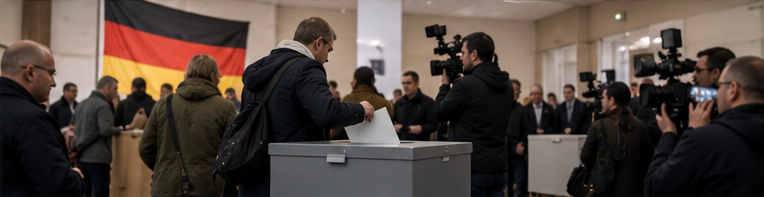
Germany's Alternative for Germany party, known as the AfD, has won a historic state election in Saxony-Anhalt. The result has shaken the country's main political parties and created a difficult question: can the AfD turn a strong election result into real government power?
The AfD finished first in the eastern German state, a result that would have been hard to imagine only a few years ago. The party has grown by attracting voters who are unhappy about immigration, the economy, energy costs, security, and traditional political leaders. Its victory is especially important because no far-right party has led a German state government in the postwar period.
Chancellor Friedrich Merz said his conservative party would not work with the AfD. He also admitted that the election result had deeply shaken his party. Germany's major mainstream parties have generally followed a policy of refusing to form coalitions with the AfD. This political barrier is often called a firewall.
Germany uses a parliamentary system. Winning the most votes does not always mean a party can govern alone. A party usually needs a majority of seats in the state parliament or needs partners to form a coalition. The AfD is therefore trying to find enough support to take power, while other parties are looking for ways to keep it in opposition.
Why the AfD is gaining support
The result matters beyond Saxony-Anhalt. Germany is Europe's largest economy and one of the most influential countries in the European Union. Political change in Germany can affect EU decisions on migration, Ukraine, defense, trade, and climate policy.
The AfD has taken positions that are very different from many traditional German parties. It wants stricter immigration policies and has strongly criticized parts of the European Union's approach to migration and climate rules. Some AfD politicians have also argued for a different relationship with Russia. These positions attract some voters and strongly worry others.
Migration is one of the most emotional issues. Some voters say they want stronger border controls and faster removal of people whose asylum requests are rejected. Migrants and minority communities, however, have expressed fear about the AfD's rise. They worry that stronger anti-immigration politics could make daily life less safe or less welcoming.
Economic frustration is another part of the story. Germany has struggled with weak growth, high energy costs, and pressure on major industries. Many workers are worried about jobs, especially in manufacturing. The AfD has used this dissatisfaction to argue that the current political system is not listening to ordinary people.
What the result means for Germany
Chancellor Merz says Germany still needs difficult economic reforms. His government argues that the country must become more competitive, modernize infrastructure, and control public spending. But reforms can be unpopular when they affect benefits, taxes, or services. The AfD hopes to gain more support if voters become frustrated with those changes.
The election also raises questions about Germany's history. After World War II and the Nazi period, German politics developed strong protections against extremist movements. For many Germans, the idea of a far-right party taking executive power carries special historical weight. Supporters of the AfD reject comparisons with the Nazi era and say they are a democratic opposition party chosen by voters.
European leaders are watching the result closely. Some right-wing and populist parties in other countries see the AfD's success as part of a broader political change across Europe. Other governments fear that a stronger AfD could weaken European unity on important issues.
Social media has also helped make the election an international story. Supporters and critics are sharing clips, speeches, and strong opinions online. This can increase attention, but it can also make political debate more divided. Short posts often remove the details that are needed to understand why people voted in a certain way.
The next step is government formation in Saxony-Anhalt. If the AfD cannot find partners, other parties may try to build a coalition even if that coalition includes groups that normally disagree with each other. Such an arrangement can keep the AfD out of power, but it may also look weak or unnatural to some voters.
The election is therefore more than a local result. It is a test for Germany's political system and for Chancellor Merz. Mainstream parties now have to decide how to answer the concerns that helped the AfD grow without copying policies they believe are wrong.
Germany remains a stable democracy with strong institutions, courts, media, and regular elections. But the Saxony-Anhalt vote shows that the political map is changing. The key question is whether this was mainly a protest in one eastern state or a sign of a larger national shift that could shape Germany for many years.
Source: Reuters — reporting published September 7–8, 2026.
09 TECHNOLOGY