Europe sends a clear message
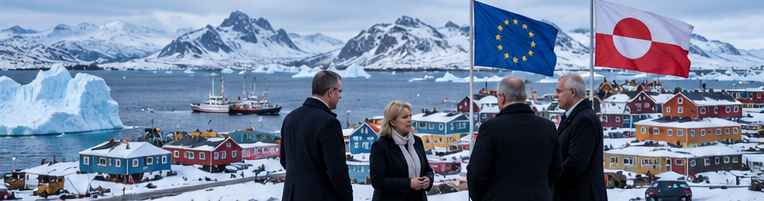
The European Union has promised Greenland a stronger partnership and hundreds of millions of euros in support as the island faces new political pressure from the United States. The move follows repeated statements by U.S. President Donald Trump that the United States should take control of Greenland for security reasons.
European Commission President Ursula von der Leyen visited Nuuk, Greenland's capital, and announced 200 million euros in support over the next two years. The money is expected to help with climate projects, internet connections, hydropower, fisheries, education, housing, small businesses, and sustainable tourism.
Von der Leyen also said she wants EU budget support for Greenland to rise to about half a billion euros from 2028. The message from Europe was both economic and political: Greenland should be able to decide its own future without pressure from another country.
Greenland is the world's largest island, but it has a small population. It is a semiautonomous territory within the Kingdom of Denmark. Greenland has its own government and controls many local matters, while Denmark remains responsible for areas such as defense and parts of foreign policy.
Why Greenland matters
The island is becoming more important because of changes in the Arctic. Melting ice is opening new possibilities for shipping, mining, research, and military activity. Greenland also sits between North America and Europe, which gives it great strategic value. The United States already has a military presence on the island.
President Trump has argued that U.S. control of Greenland would strengthen national and Arctic security. Greenlandic and Danish leaders have repeatedly rejected the idea that the island can simply be taken or bought. They say Greenland's future must be decided by its people.
The European Union is supporting that position. During the visit, von der Leyen stressed the importance of sovereignty, borders, and international law. Greenland's Prime Minister Jens-Frederik Nielsen thanked the EU for standing by the island during a difficult period.
The support also includes practical investment. Greenland faces high costs because its towns are far apart and many communities are difficult to reach. Better internet can improve education, health services, and business. Hydropower can provide cleaner energy. Investment in fisheries matters because fishing is one of Greenland's most important industries.
Security, investment, and Greenland's future
Climate change is another major issue. The Arctic is warming faster than many other parts of the world. Ice loss affects local communities, wildlife, sea levels, and global weather systems. Greenland needs money for research, adaptation, and infrastructure that can work in changing conditions.
Security is also becoming more visible. European countries have increased military exercises in the Arctic. During von der Leyen's visit, 11 NATO countries began the Arctic Shield exercises in Greenland. Around 400 military personnel were involved, including troops trained to work in cold and difficult Arctic conditions. U.S. forces were not taking part in those exercises.
Earlier in the year, Denmark and several European allies sent military personnel to Greenland for exercises. The move was widely seen as a sign of support for Danish and Greenlandic sovereignty. Trump later threatened tariffs on some European countries but stepped back after NATO agreed to increase its focus on Arctic security.
The situation creates an unusual problem inside NATO. The United States, Denmark, and many EU countries are allies. They normally work together on defense. But Trump's statements about Greenland have created tension between partners that are supposed to protect one another.
For Greenlanders, the debate is not only about Denmark, Europe, or the United States. Many people on the island also discuss greater independence in the future. Some want closer links with Europe. Others want more control over natural resources and foreign investment. These decisions are important because outside powers are showing more interest in the Arctic.
There are also economic opportunities. Greenland has important minerals and a large fishing sector. New shipping routes could develop as Arctic ice changes. Tourism may grow. But development must be balanced with environmental protection and the rights of local communities.
The EU's new money will not solve every problem, but it is a clear signal. Europe wants Greenland to see the EU as a long-term partner, not only during a political crisis. The investment may also reduce Greenland's need to depend too heavily on any one outside country.
The next question is how the United States responds and whether Trump's pressure continues. European governments will also watch how Greenland uses the new funding and how its relationship with Denmark develops.
At the center of the story is a simple principle: the people who live in Greenland should have a strong voice in deciding Greenland's future. As the Arctic becomes more important to world politics, that principle will be tested again and again by security interests, economic competition, and the growing attention of powerful countries.
Source: AP News — reporting published September 7–8, 2026.