
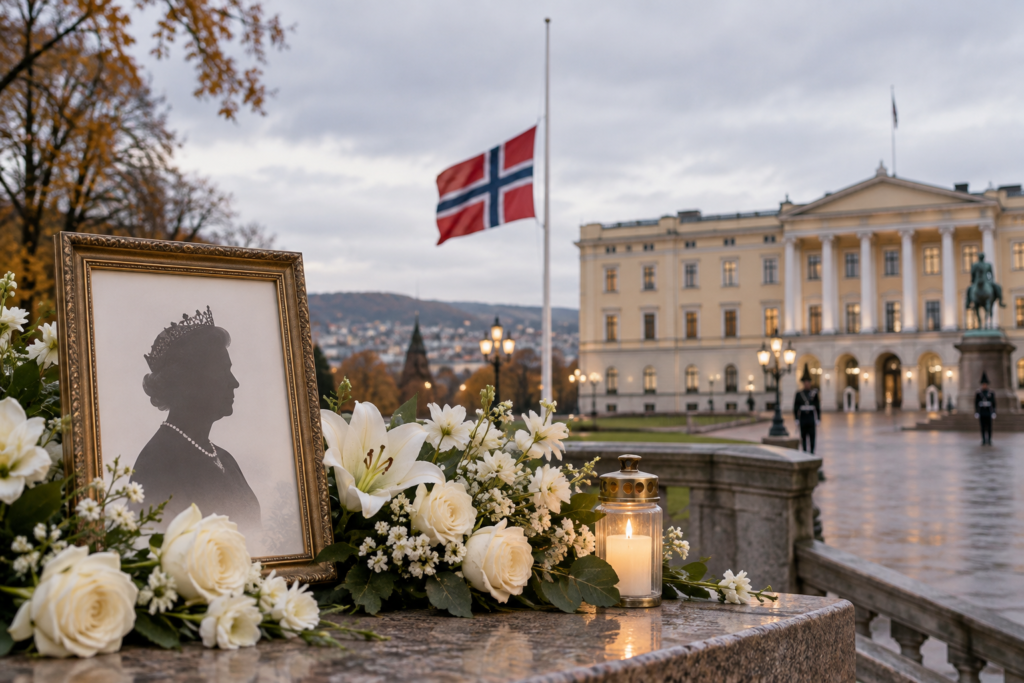
The respected royal died two days after attending the funeral of her brother, King Harald, ending decades of public service.
Princess Astrid of Norway has died at the age of 94, the Norwegian Royal House announced. She died peacefully on Friday, September 11. Her final public appearance had come only two days earlier, when she attended the funeral of her younger brother, King Harald. The closeness of the two events brought another period of sadness to Norway's royal family and made her death a widely searched story across Europe.
Princess Astrid was born on February 12, 1932. She was the daughter of King Olav V and Crown Princess Martha and the older sister of King Harald. Her childhood was shaped by the Second World War. After Germany invaded Norway in 1940, she and other members of her family spent part of the war years in the United States. They returned to Norway after the war ended in 1945.
Her public responsibilities began early. Crown Princess Martha died in 1954, when Astrid was only 22. The young princess then became the leading woman representing Norway's royal family. For about 14 years, she attended official events, welcomed visitors, and supported her father and other relatives. She continued in that role until Harald married Sonja in 1968.
In 1961, Princess Astrid married Johan Martin Ferner. They had five children: Cathrine, Benedikte, Alexander, Elisabeth, and Carl-Christian. Ferner died in 2015. The couple's children did not receive royal titles, and the family often lived with more privacy than senior working royals. Even so, Astrid continued to serve the country and appear at events connected to the Royal House.
Over many decades, she supported organizations working with people who needed extra care. The royal statement described her as warm, loyal, and responsible. Her nephew, King Haakon VIII, said she had been an important support to King Harald and to the rest of the family. He also remembered that she was willing to speak honestly and share her experience.
Princess Astrid's long service connected several generations of the Norwegian monarchy. She was a daughter of one king, a sister of another, and an aunt of the present king. This gave her a special place inside the family. She remembered Norway before and after the war, watched the country change, and helped the monarchy adapt while keeping many of its public traditions.
Her appearance at King Harald's funeral became especially meaningful after her own death. It showed her sense of duty and her close family connection even at an advanced age. Many people were moved by the fact that she had joined the nation in saying goodbye to her brother only days before Norway began to remember her own life.
The palace ordered the flag to be lowered to half-mast on the day of her death and again on the day of her funeral. Norway's government said the funeral would be paid for by the state. Prime Minister Jonas Gahr Store thanked the princess for her service to Norway and said the country remembered her with both sadness and gratitude. These official actions reflect the length and importance of her public work.
Princess Astrid's death marks the end of a remarkable life of family service and national duty. She was not usually the main person at the center of royal news, but she remained a steady presence for more than 70 years. For many Norwegians, that quiet service was her greatest strength. Her life also showed how a supporting member of a royal family can build public trust through patient work rather than constant attention. The tributes now focus on her warmth, humor, honesty, and care for vulnerable people, as well as her loyalty to her family and country.
Sources: Norwegian Royal House | Government of Norway
09 WORLD