
New strikes have renewed fears for civilians, Gulf countries and shipping through the Strait of Hormuz.
AI-generated editorial illustration created for this article.
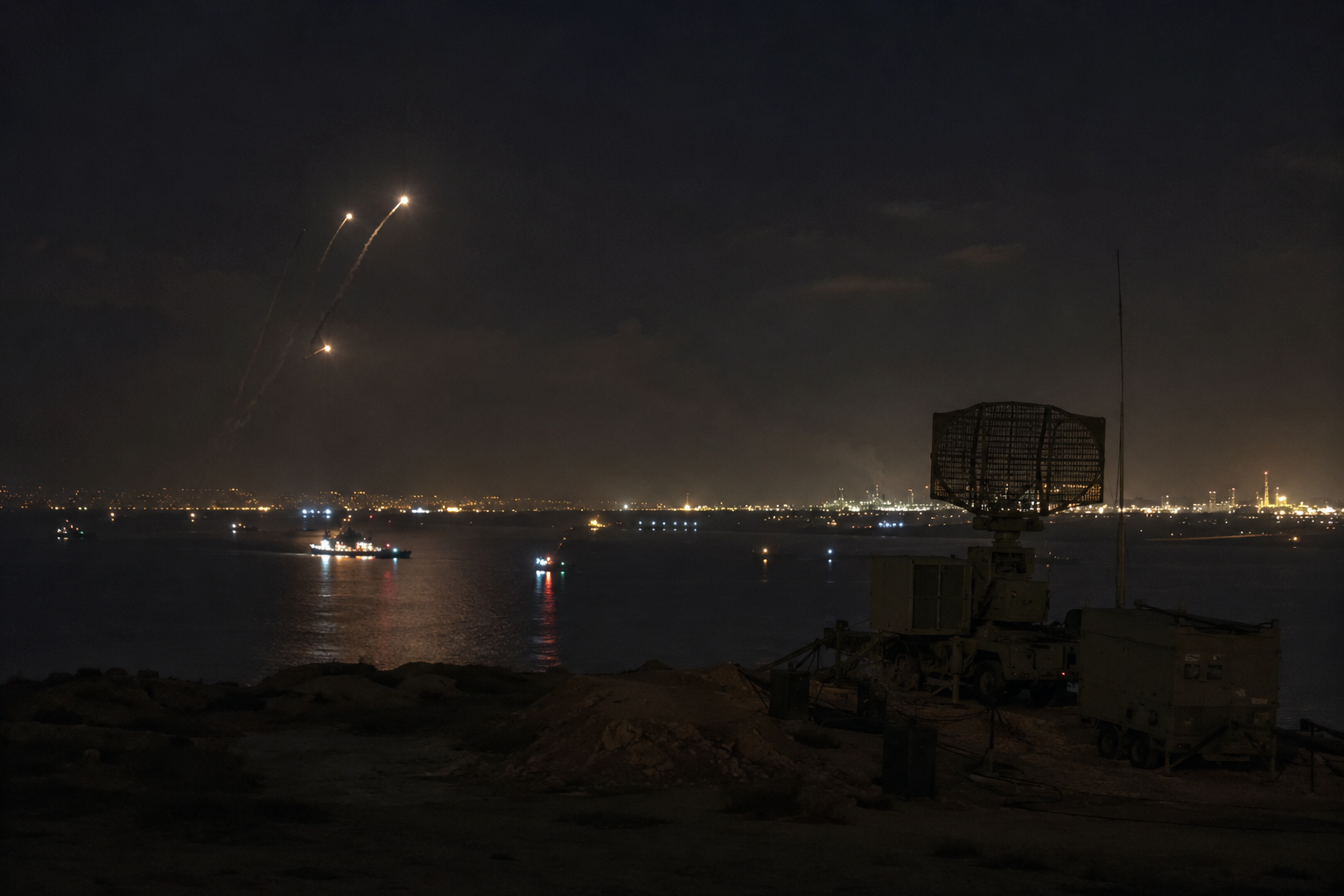
The United States and Iran have exchanged new attacks after several weeks of lower fighting. The new strikes have brought the conflict back into the center of world attention. The United States said it attacked Iranian military targets, including radar, missile and communications systems. Iran answered with missiles and drones aimed at places linked to the United States in Bahrain, Jordan, Kuwait and Iraq. Gulf countries reported alarms, interceptions and damage. These events show how quickly a period of relative calm can end when both sides believe they must answer the other side with force.
The greatest concern is the effect on ordinary people. Iranian officials said 18 people were killed and 108 were injured in the latest American strikes. One attack hit near a wedding in southern Iran, killing four people and hurting many others, according to Iranian reports. The United States says it does not target civilians, but modern weapons can still cause terrible harm when military sites are near towns, roads or homes. The United Nations and human rights groups have called on all sides to protect civilians and stop attacks that may spread fear far beyond the military targets.
Iran's answer has also placed several neighboring countries in a difficult position. Bahrain hosts the regional headquarters of the US Navy. Kuwait, Iraq and Jordan also have important links with the United States. Iran said it attacked US assets in these countries, while local authorities tried to protect airports, bases and residential areas. Some Iranian drones were reportedly intercepted. Even when an attack causes limited damage, it can close airspace, delay flights and force people into shelters. Governments in the Gulf worry that they may be pulled deeper into a war they did not start.
The Strait of Hormuz is another major concern. This narrow waterway connects the Gulf with the wider ocean, and a large share of the world's oil passes through it. Iran has increased restrictions on ships that it says do not follow its rules. Any serious interruption could raise fuel prices across the world. Higher oil prices can make transport, food and electricity more expensive. Countries that import most of their energy may suffer the most. Shipping companies also face higher insurance costs when tankers travel through an area where missiles or drones may be used.
The fighting also creates political pressure in Washington and Tehran. US President Donald Trump has said the United States is ready to strike again if necessary. At the same time, many Americans are worried about a longer war, military losses and higher petrol prices. Iranian leaders are under pressure to show that they can defend the country and answer American attacks. This makes compromise harder. Leaders may fear that talks will look like weakness, even when talks could reduce the danger for their people.
Diplomacy has not completely disappeared. Other countries can help carry messages between the two sides, and international organizations can push for rules that protect civilians and shipping. A temporary pause could allow both governments to discuss the next steps. However, trust is very low. Each side may believe that the other is using talks only to gain time. For diplomacy to work, both sides would need clear promises, reliable monitoring and a way to respond to problems without immediately returning to military action.
In the coming days, the world will watch whether the attacks continue, whether oil ships can move safely and whether Gulf countries face more danger. People should be careful with dramatic claims on social media because information during a war can be incomplete or false. The central fact is simple: new attacks increase the risk of a wider regional conflict. The safest path for civilians and the global economy is a quick reduction in fighting, followed by serious talks that address security concerns without creating more loss and fear.
Source used for factual reporting: Reuters. Facts were current on September 3, 2026; developing stories may change.
WORLD NEWS / STORY 02
Leave a Reply