
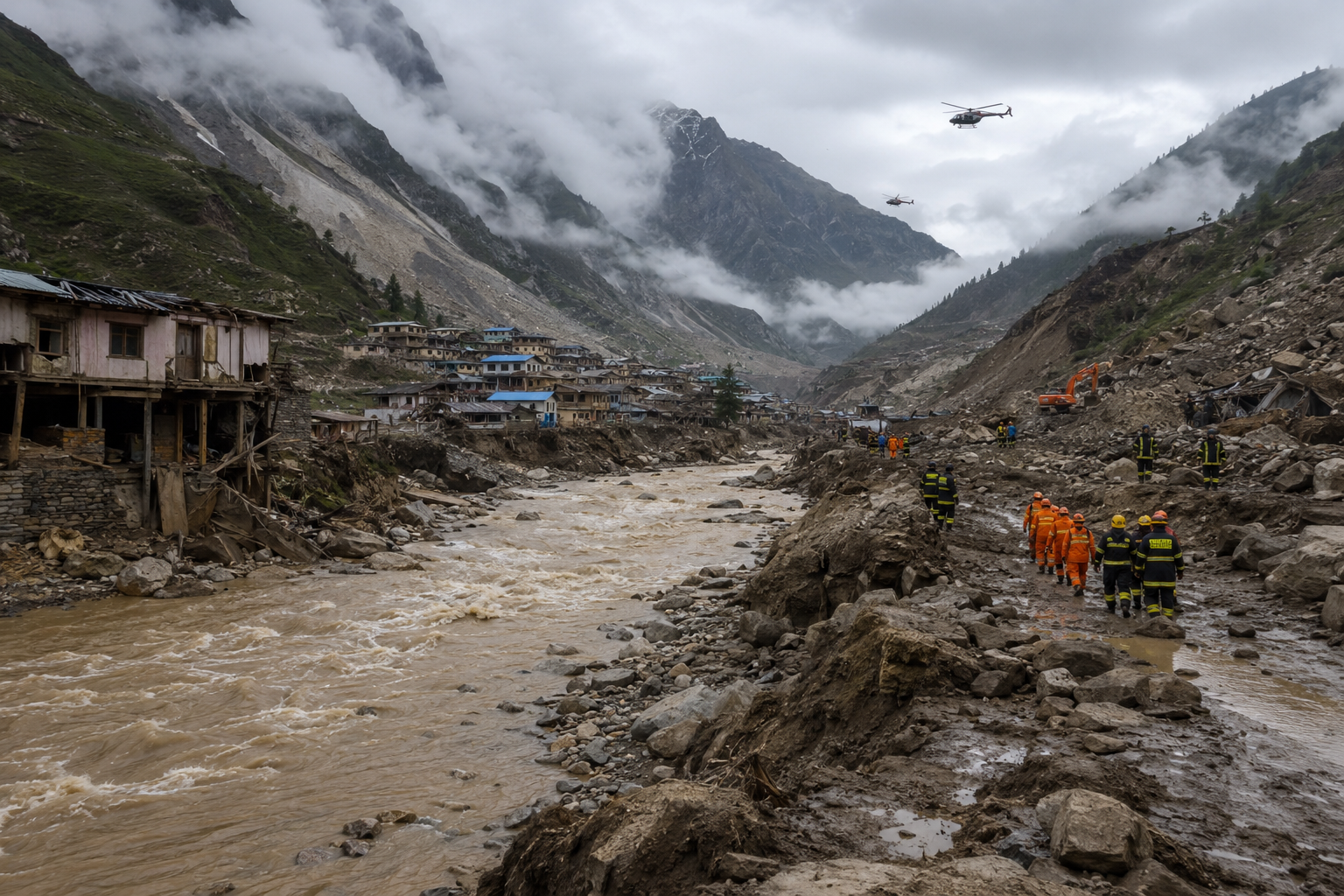
Rescuers are still searching Himalayan valleys as Nepal prepares to rebuild thousands of homes in safer places.
AI-generated editorial illustration created for this article.
Nepal is facing one of the worst natural disasters in its recent history after a huge flood struck the Himalayan border area near China. Officials said at least 1,204 people were killed in Nepal, while more than 4,200 people were still missing. The disaster began after a glacier collapse sent a powerful wall of ice, mud, rock and water down mountain valleys. Entire villages were damaged or destroyed. Roads, bridges and communication lines disappeared under the debris, making it very hard for rescue teams to reach people who may still be trapped.
Search operations have continued without a break. Nepali teams are working with help from India, China, South Korea and other countries. Helicopters are carrying food, medicine and rescue workers into places that vehicles cannot reach. Teams are also looking inside tunnels connected to hydropower projects, where workers may have been trapped. Nine South Korean workers are among those missing, according to reports. The work is dangerous because rocks can still fall from unstable mountain sides, and damaged roads may collapse under the weight of rescue vehicles.
Survivors now need much more than emergency rescue. Many families have lost their homes, clothes, animals and tools. Around 20,000 homes may need to be rebuilt because they were destroyed or are no longer safe. The government says it does not want families to return to the same dangerous places. This means whole communities may have to move to new land. Moving is not easy. People may lose access to farms, jobs, schools, religious places and neighbors who have been part of their lives for many years.
Children are among the most vulnerable. More than 22,000 children urgently need clean water and better hygiene services, aid groups have said. Schools have been damaged, and many children have lost books, uniforms and a safe place to study. Temporary classrooms can help, but children also need emotional support. Some have lost parents or friends, while others saw their homes disappear. Simple routines, safe spaces and contact with trusted adults can help children recover from the shock, but this support may be needed for a long time.
The flood has also raised questions about climate change and early warning systems. Mountain glaciers are changing as the planet becomes warmer. Scientists say warmer conditions can make some glaciers less stable and can create dangerous lakes behind ice or rock. However, experts must study this exact event before deciding all its causes. Nepal and China had discussed sharing more information about mountain risks before the disaster. Better satellite data, river measurements and warning messages could give communities more time to move to higher ground.
Rebuilding will take years and require careful choices. New homes, roads and schools should be placed in safer areas when possible. Buildings may need stronger designs that can survive floods and landslides. Nepal also plans to rebuild an early-warning system using sensors and satellite technology. Such systems are valuable only if warnings reach people quickly and clearly. Villages need evacuation routes, regular practice and trusted local leaders who know what to do when an alarm arrives. Technology and community planning must work together.
For now, families are waiting for news about missing relatives. Rescue teams still hope to find survivors, but hope becomes smaller as time passes. International help can provide equipment, money and technical knowledge, yet local communities will lead the long recovery. The disaster is a reminder that mountain beauty comes with serious natural risks. Protecting people will require safer rebuilding, stronger cooperation across the Nepal-China border and early warnings that turn scientific information into fast action before the next emergency begins.
Source used for factual reporting: Reuters. Facts were current on September 3, 2026; developing stories may change.
WORLD NEWS / STORY 03
Leave a Reply