
During a visit to Egypt, President Xi Jinping asked regional countries to consider a new security framework.
AI-generated editorial illustration created for this article.
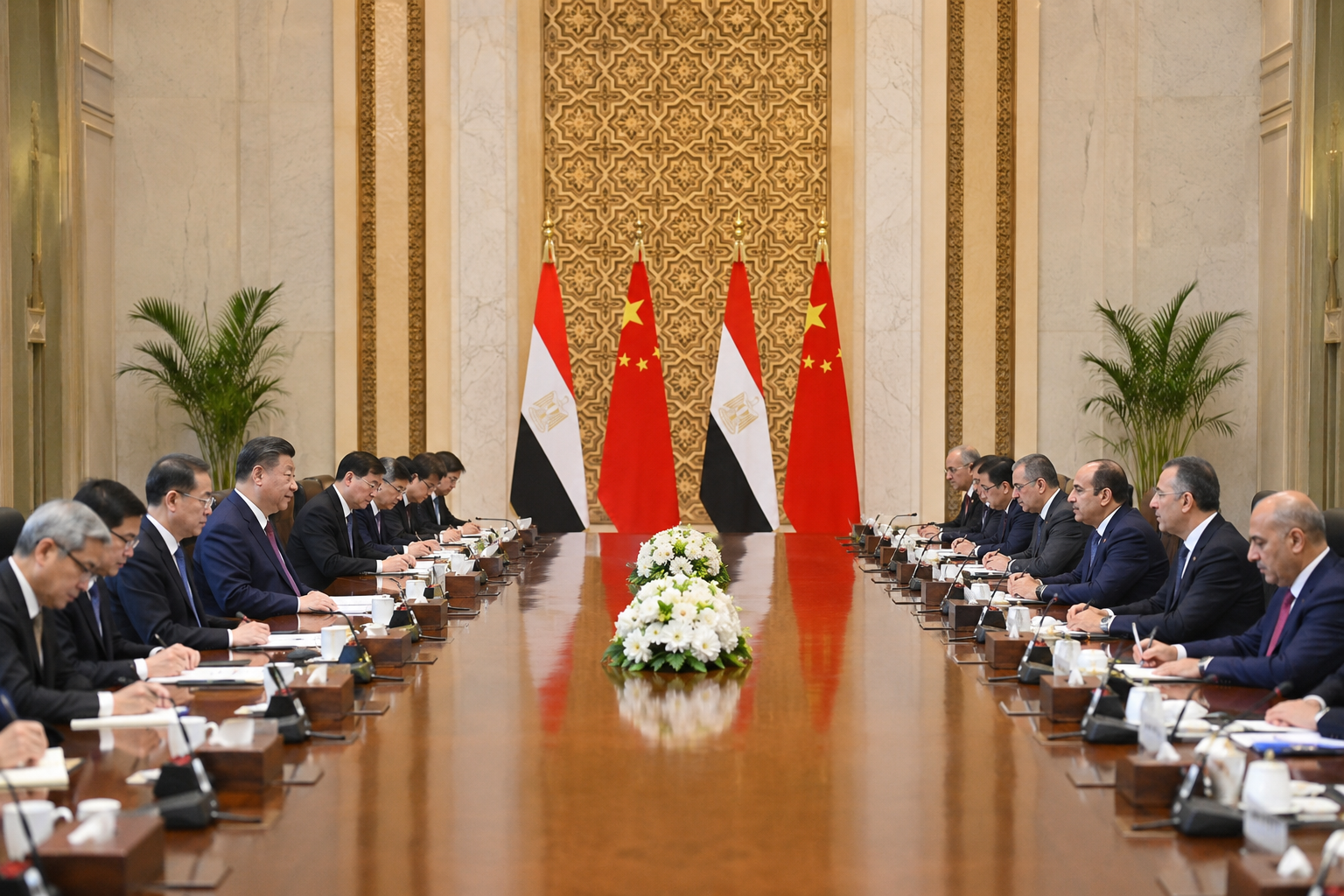
Chinese President Xi Jinping has called for a new approach to security in the Middle East during an official visit to Egypt. Xi said countries in the region should oppose outside interference and consider building a new security framework. His comments came while the war between the United States and Iran was changing trade, military planning and political relations across the region. The visit was Xi's first trip to the Middle East in four years and his first state visit to Egypt in about ten years.
Egyptian President Abdel Fattah al-Sisi welcomed Xi with a formal ceremony in Cairo. The two leaders said their countries would deepen cooperation in security, counterterrorism and the economy. They also discussed technology, including data centers, semiconductors and important minerals. Another goal is to use their national currencies more often in trade, which could reduce their dependence on the US dollar. China is already a major trade and investment partner for Egypt, and Chinese companies are active in the Suez Canal Economic Zone.
The idea of a new security system is important because the Middle East has often depended on the United States for military protection and diplomacy. The United States has bases, troops and security partnerships across the region. However, the conflict with Iran has made some governments question whether this system brings enough safety. China is presenting itself as another powerful partner that supports dialogue, economic development and respect for national governments. Critics may ask whether China can provide real security during a crisis or whether its role will mainly remain economic.
Egypt tries to keep good relations with several major powers. It receives large amounts of military aid from the United States, but it also buys equipment and attracts investment from other countries. Egyptian officials sometimes describe this as strategic balance. By working with Washington, Beijing, Europe and Gulf states, Egypt hopes to protect its interests and avoid depending too much on one partner. Recent joint military exercises between China and Egypt show that their relationship is moving beyond trade, although US ties remain very important.
Economic cooperation is a central part of China's influence. Chinese firms have invested in transport, manufacturing and green-energy projects near the Suez Canal. The canal is one of the world's most important shipping routes, connecting Asia and Europe. Egypt wants investment that creates jobs and brings modern technology. China wants reliable trade routes and friendly partners. Yet large projects can create concerns about debt, local employment and control of important infrastructure. Good agreements need clear costs, public information and benefits that reach ordinary people.
A regional security framework would be difficult to design. Middle Eastern countries have different views about Iran, Israel, the United States and armed groups. Some governments are close allies, while others have deep disagreements. A useful system would need rules for solving disputes, protecting shipping, limiting attacks on civilians and sharing information about threats. It would also need trust, which cannot be built through one meeting. China may be able to bring some sides together because it has economic links with many countries, but it cannot remove their disagreements by itself.
Xi's visit shows that China wants a larger diplomatic role at a time of uncertainty. Egypt welcomes more choices and more investment, while China gains a strong partner near the Suez Canal and the Arab world. The next test will be whether the two countries turn broad promises into practical steps. The world will watch for new agreements, joint projects and possible peace efforts. A new security idea can attract attention, but its value will depend on whether it reduces violence and gives countries a fair way to discuss their fears.
Source used for factual reporting: Reuters. Facts were current on September 3, 2026; developing stories may change.
WORLD NEWS / STORY 06
Leave a Reply