
The allies plan more joint training and a larger American military presence as China expands its Pacific influence.
AI-generated editorial illustration created for this article.
Australia and the United States have announced plans to strengthen their defense cooperation as both countries watch China's growing influence in the Pacific. Australian Defence Minister Richard Marles met US Defence Secretary Pete Hegseth in Washington. After the meeting, Marles said the American military presence in Australia would grow across land, sea and air activities. The two governments say the purpose is to prevent conflict by showing that they can work together quickly if a serious security problem develops in the Indo-Pacific region.
The plans build on the US-Australia Force Posture Initiatives. These arrangements allow the two militaries to train together, store equipment and improve transport and supply systems. Australia already hosts rotations of US Marines in its north, where the climate and distance provide useful training conditions. A larger presence could include more aircraft, ships, equipment or personnel, although officials did not give a final number. More details are expected later in the year. Both sides say the cooperation will improve their ability to respond to disasters as well as military threats.
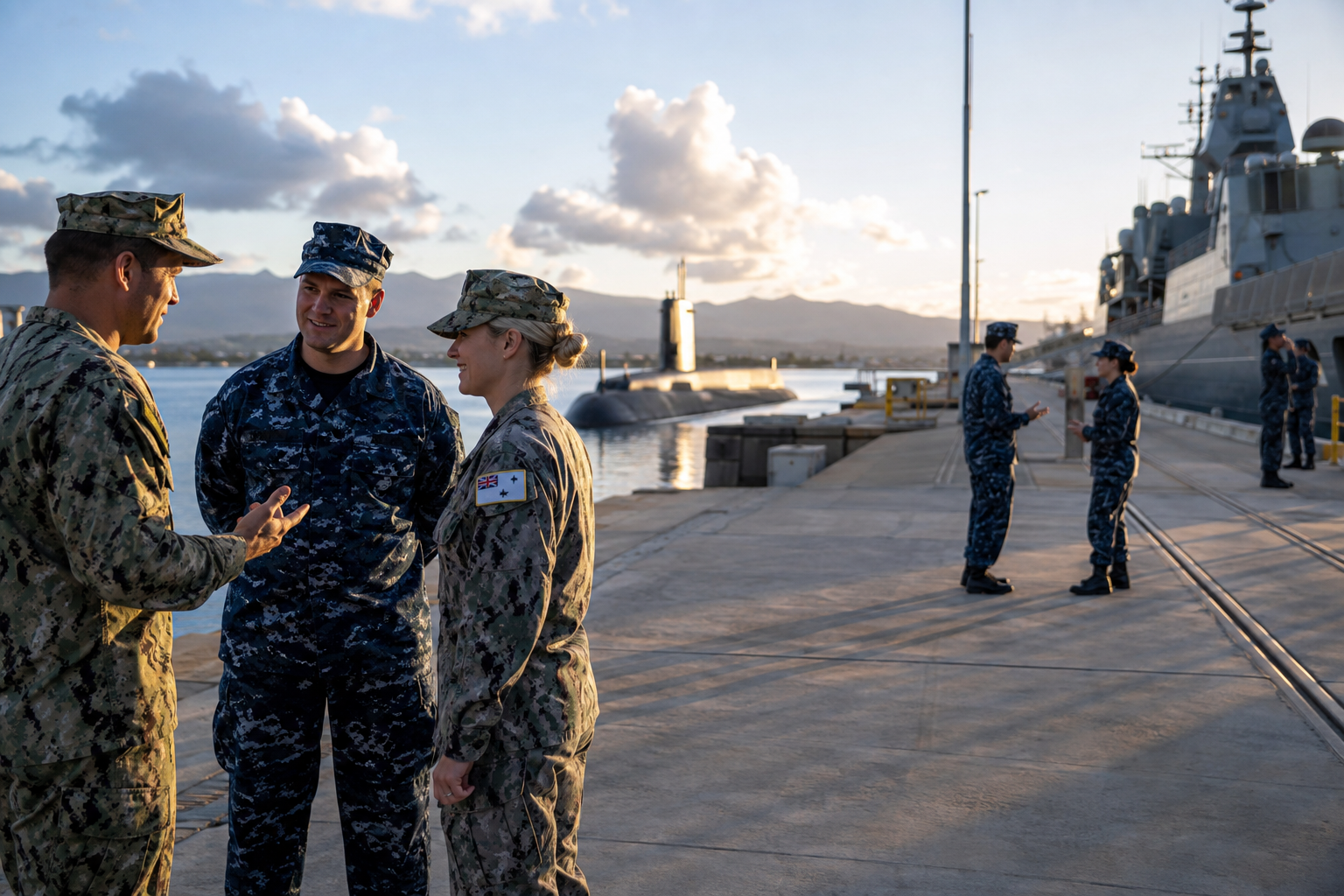
The AUKUS partnership is another major part of the relationship. Under AUKUS, Australia, Britain and the United States are working together on nuclear-powered submarines and advanced defense technology. The HMAS Stirling naval base in Western Australia is expected to host American Virginia-class submarines from 2027. Nuclear-powered submarines can travel long distances and remain underwater for long periods. Australia says they will carry normal weapons, not nuclear bombs. Supporters believe the plan will strengthen defense, while critics worry about the high cost, technical difficulty and risk of an arms race.
China has criticized AUKUS and stronger American military activity in the region. Beijing says these steps increase tension and encourage countries to choose sides. The United States and Australia answer that China's larger navy, security agreements and activities near disputed waters have changed the balance. Pacific island countries often do not want their region to become a field for competition between great powers. Their main concerns may include climate change, development, fishing, health and disaster support rather than military rivalry.
Washington and Canberra also announced about 580 million dollars in joint support for Pacific island nations. This funding is meant to improve regional engagement and show that the partnership offers more than military activity. Assistance may support infrastructure, communication, disaster response and other needs. The timing is important because China has increased loans, investment, police cooperation and diplomatic activity in the Pacific. Island governments can benefit from having several partners, but they also want projects that respect local choices and do not create difficult debt.
For Australia, the United States has been its most important military ally for decades. However, Australia also depends heavily on trade with China. This creates a careful balancing problem. Canberra wants to protect its security relationships without losing economic opportunities or creating unnecessary conflict. The United States wants capable allies to spend more on defense and carry a greater share of regional work. Australia says it is increasing defense spending, but large projects such as submarines will require stable budgets, skilled workers and public support for many years.
The new announcement does not mean that conflict is certain. Military cooperation is often designed to make an attack less likely by showing readiness and unity. Still, more forces and equipment can also make rivals feel threatened. Clear communication will be important so that exercises or movements are not misunderstood. The success of the partnership should also be measured by whether it supports peace, helps Pacific communities and keeps sea routes open. The coming months will show what the larger US presence will include and how China and Pacific governments respond.
Source used for factual reporting: Reuters. Facts were current on September 3, 2026; developing stories may change.
WORLD NEWS / STORY 07
Leave a Reply