
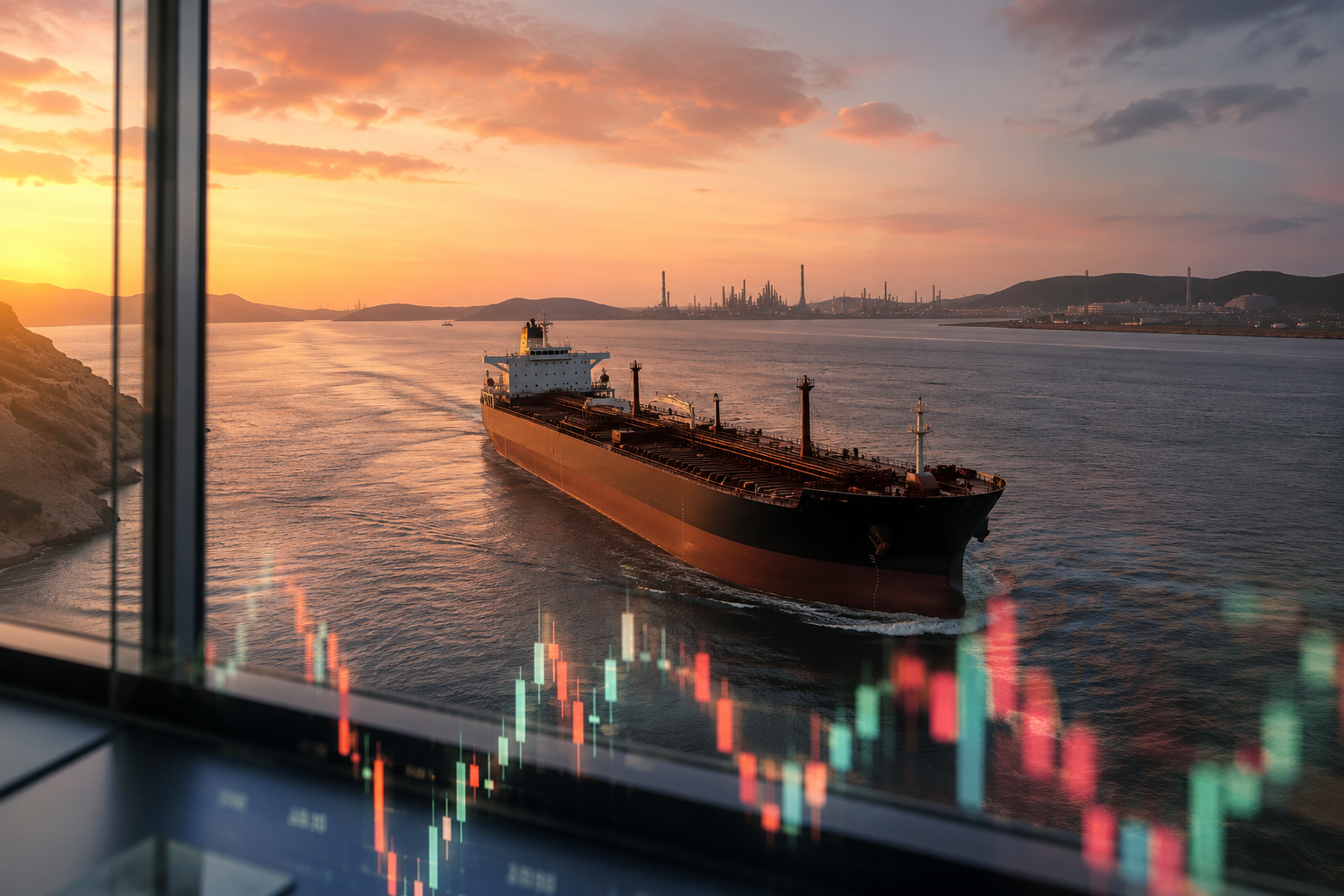
Brent crude remains near $95 a barrel as traders worry about supplies moving through the Strait of Hormuz.
AI-generated editorial illustration created for this article.
Oil prices remained high on September 3 as traders watched the renewed fighting between the United States and Iran. Brent crude, an international price standard, was near 95 dollars a barrel. US West Texas Intermediate crude was above 90 dollars. Prices moved slightly lower during early trading, but they were still much higher than before the latest attacks. The market is nervous because the Middle East produces and exports a large part of the world's oil, and the conflict could interrupt supplies with very little warning.
The Strait of Hormuz is at the center of these worries. It is a narrow sea route between Iran and Oman that connects Gulf oil producers with world markets. Tankers from countries such as Saudi Arabia, Iraq, Kuwait and the United Arab Emirates often pass through it. Iran has increased restrictions on some ships, and normal traffic has been reduced during parts of the conflict. If tankers cannot travel safely, less oil may reach customers. Even the fear of a closure can raise prices because buyers and sellers try to protect themselves from a future shortage.
Oil prices can change quickly when military news appears. On September 1, Brent rose more than four dollars in one day as the United States and Iran exchanged major attacks. The next day it rose again. Then prices became a little lower when traders saw no new large attack for several hours. This movement shows that markets are not only reacting to current supply. They are also trying to guess what may happen next. A statement from a leader, a report about a tanker or a sign of peace talks can move prices within minutes.
Higher oil prices affect more than drivers. Oil is used to move goods by truck, ship and aircraft. It is also used to make plastics, chemicals and many industrial products. When energy costs rise, businesses often pay more to produce and deliver food, clothes and other goods. Some of those costs are passed to customers. Countries that import most of their oil may see higher inflation and pressure on their currencies. Poor households can be hit hardest because transport and food take a large share of their income.
There are factors that may limit the rise. Iraq increased its exports in August and expects more growth in September. Other producers may also send more oil if they have spare capacity. On one recent day, about 17 million barrels passed through the Strait of Hormuz, the highest daily volume since the conflict began. This showed that shipping had not stopped completely. World oil demand, economic growth and fuel reserves also influence prices. A slow global economy can reduce demand even during a serious political crisis.
Governments and companies have several ways to prepare. Some countries keep emergency oil reserves that can be released if supply falls sharply. Shipping companies may change routes, add security or pay higher insurance. Airlines can protect themselves by agreeing future fuel prices in advance. Central banks watch energy prices because they can increase inflation. However, none of these tools can fully replace the huge amount of oil that normally moves through the Gulf. A long closure of Hormuz would be difficult and expensive for the whole world.
The next direction for prices will depend mainly on security and diplomacy. If the United States and Iran reduce attacks and shipping continues, the extra fear in the price may slowly fall. If fighting grows or tankers are damaged, prices could rise again. Consumers should remember that oil markets change every day, so one price is only a moment in a larger story. The safest support for stable energy prices is not a market trick; it is a reliable reduction in conflict and clear rules that allow ships to travel safely.
Source used for factual reporting: Reuters. Facts were current on September 3, 2026; developing stories may change.
WORLD NEWS / STORY 08
Leave a Reply