
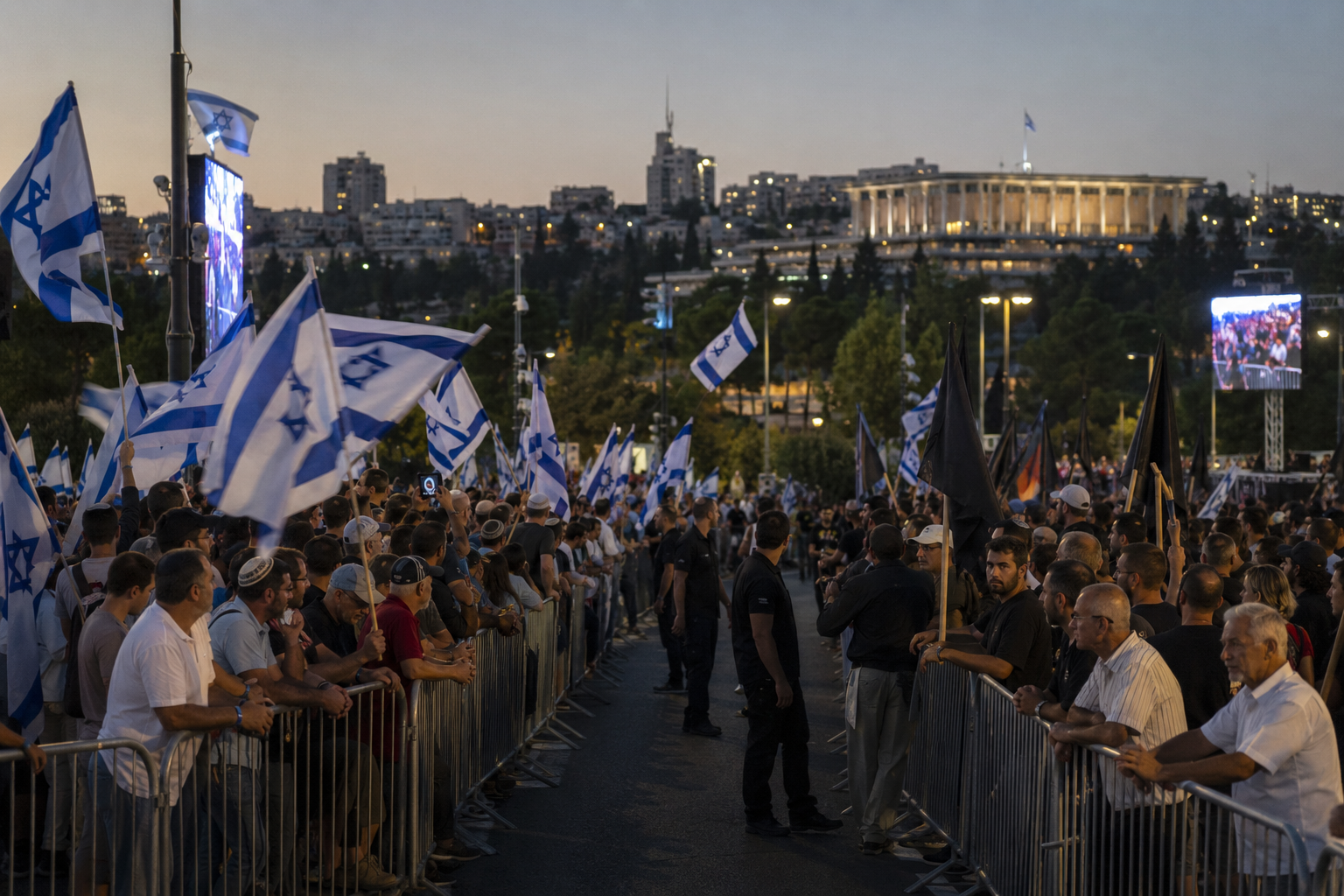
Israel's prime minister is urging small right-wing parties to unite before the October 27 vote.
AI-generated editorial illustration created for this article.
Israeli Prime Minister Benjamin Netanyahu is working to unite his divided right-wing support base before the national election on October 27. After many years in power, Netanyahu remains the most important figure on the Israeli right, but several small parties are competing for the same voters. He has warned that if these parties remain separate, some may fail to enter parliament. Their votes would then not produce seats, making it harder for Netanyahu and his allies to form the next government.
Israel uses a system of proportional representation. Voters choose a party, and seats in the 120-member Knesset are divided according to each party's share of the vote. A party must receive at least 3.25 percent to enter parliament. This rule creates danger for small groups. A party may win tens of thousands of votes but receive no seats if it remains below the limit. Netanyahu remembers the 2021 election, when divided right-wing votes helped remove him from office for a period.
Two powerful figures on the right are Itamar Ben-Gvir and Bezalel Smotrich, who have served as senior ministers in Netanyahu's government. They lead separate nationalist parties and do not always agree about leadership, election lists or political strategy. Another small party has agreed to join Smotrich's group, giving Netanyahu some progress. However, other leaders may still choose to run alone. Parties face a September 8 deadline to complete their lists or leave the race, so the pressure to make alliances is growing.
Netanyahu's campaign takes place after years of war and deep social disagreement. The Hamas-led attack on October 7, 2023, badly damaged his image as a leader who could protect Israel. Long and difficult wars in Gaza, Lebanon and Iran have not produced the clear peace or victory that many citizens wanted. Supporters say Netanyahu has experience and is strong on security. Opponents say the country needs new leadership, an official examination of past failures and a different plan for relations with Palestinians and neighboring countries.
The election is also about daily life. Israeli families have faced military service, reserve duty, higher costs and long periods of uncertainty. Disagreements over whether ultra-Orthodox men should serve in the military have placed pressure on Netanyahu's partnerships with religious parties. Some voters care most about security, while others focus on the economy, corruption cases, public institutions or a possible end to war. Because no single party is expected to win a majority, the next prime minister will almost certainly need a coalition of several parties.
Netanyahu's main challenge may therefore come from inside his own political camp, not only from the center or left. If small right-wing parties unite, they may protect more votes and seats. But joining together can require leaders to give up positions or accept candidates they dislike. If they remain separate, each group can keep its identity but risks falling below the election limit. Netanyahu is using strong language, saying division could allow his opponents to lead the country. His rivals answer that voters deserve real choices.
The October vote will be an important judgment on Netanyahu's long leadership. It will also decide how Israel approaches war, security, religion, the economy and relations with Palestinians. Campaign claims should be checked carefully because parties often use fear to move voters. Polls can show a trend, but they cannot predict final alliances or turnout. In the weeks ahead, attention will focus on party mergers, candidate lists and whether the right can present a united bloc. The result may shape Israeli politics and the wider region for years.
Source used for factual reporting: Associated Press. Facts were current on September 3, 2026; developing stories may change.
Leave a Reply