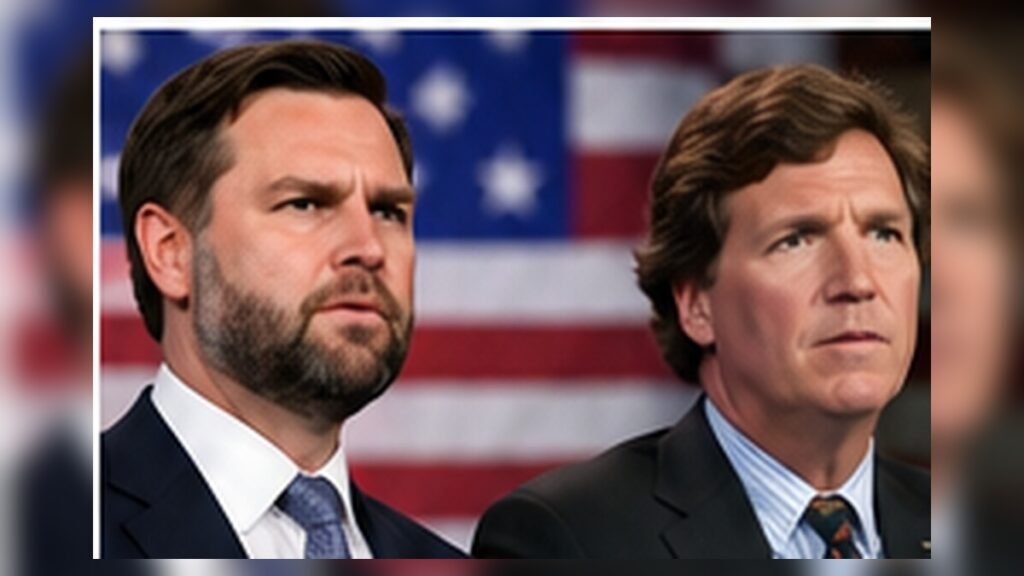
U.S. Vice President JD Vance defended his friendship with media personality Tucker Carlson on September 3, 2026, after reporters asked him about criticism of their relationship. Vance said that he and Carlson are friends even though they disagree on several political questions. His comments quickly became part of a larger online debate about politics, personal loyalty, free speech, and disagreement inside the Republican movement.
Vance made the comments during a White House press briefing. He said he was not willing to end a friendship simply because he disagreed with someone politically. He also pointed out that Carlson has criticized President Donald Trump and has taken positions that Vance does not share. Vance presented the issue as a wider lesson about how people should deal with political differences.
The discussion around Carlson is sensitive because he is a very influential political commentator who has also faced strong criticism. In recent years, he has disagreed with some Republican leaders on foreign policy, Israel, and other issues. He has also been criticized over some of the people and ideas that have appeared on his program. Supporters say he challenges powerful institutions and asks questions others avoid. Critics say some of his content gives attention to harmful or extreme ideas.
Because Vance is the vice president, his friendships can become political news. Public officials are often judged not only by their own statements but also by the people they meet, support, or appear with. Critics may ask whether a relationship shows agreement. Supporters may answer that friendship does not mean two people share every view.
Vance’s main argument was that political disagreement should not automatically destroy personal relationships. He said the country depends on people with different views being able to talk to each other. This idea has support from people who worry that American politics has become too divided. Many families, workplaces, and communities include people who vote differently, and political arguments can damage personal ties.
However, others believe there are limits. They argue that some political ideas are not simple differences of opinion, especially when they involve discrimination, conspiracy theories, or attacks on democratic rules. From this point of view, a public leader’s choice to stay close to a controversial figure can send an important message. This is why the debate is not only about friendship; it is also about responsibility and public influence.
The story became popular on social media because both Vance and Carlson have large audiences. Short video clips from the briefing were shared widely, and users debated whether Vance’s answer showed loyalty, weakness, open-mindedness, or political calculation. Different groups interpreted the same comments in very different ways.
The issue also reflects a larger debate inside conservative politics. Republicans do not agree on every question, especially foreign policy and the U.S. relationship with Israel. Carlson has become a leading voice for a more skeptical approach to overseas military involvement, while other Republicans support a more traditional foreign policy. Vance has sometimes shared parts of that skepticism but does not agree with Carlson on every issue.
For now, Vance’s position is clear: he plans to remain friends with Carlson despite political disagreements. Whether this becomes a larger political problem will depend on future comments, elections, and debates inside the Republican Party. The story shows how personal relationships can become national political questions when the people involved have major public influence.