
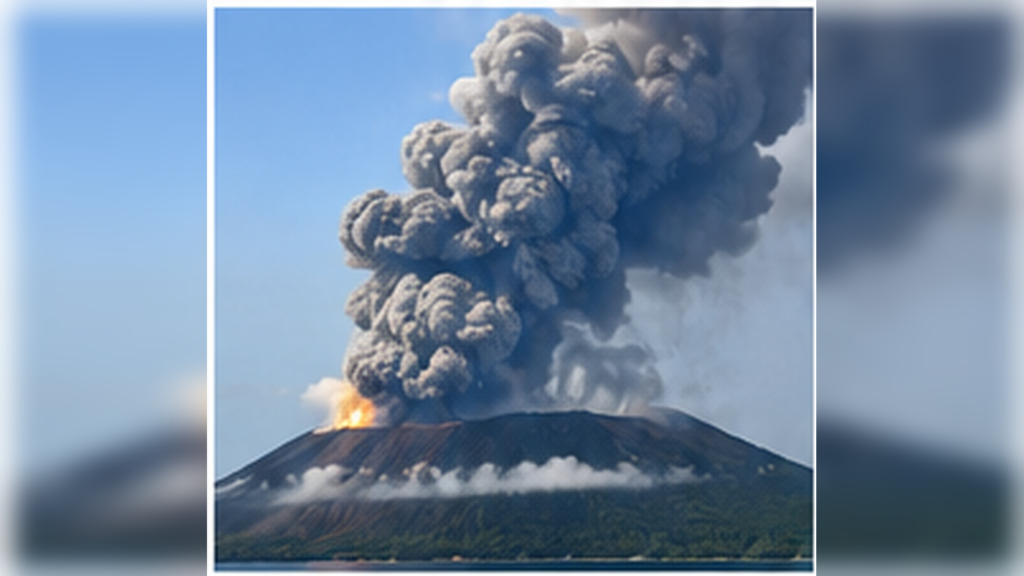
Illustrative image generated for this article.
A powerful eruption at Mount Anak Krakatau has caused major travel problems in Indonesia. Reuters reported that seven airports, including two that serve Jakarta, remained closed on Monday morning because volcanic ash had spread across the region. The eruption began late on Friday and sent ash high into the sky. More than 2,300 flights were delayed, diverted, or canceled, affecting more than 270,000 passengers. The problem is especially serious because Jakarta is one of the largest cities in Southeast Asia and its airports connect Indonesia with many parts of the world.
Volcanic ash is dangerous for airplanes even when it looks like normal smoke. It contains very small pieces of rock, glass, and other material. If an aircraft flies through thick ash, the material can enter its engines. At very high temperatures, some of the ash can melt and damage important engine parts. Ash can also make it difficult for pilots to see, and it can damage windows and other surfaces. For this reason, aviation authorities often close airspace when a volcano sends large amounts of ash into flight paths.
Indonesia's transport ministry said Jakarta's main Soekarno-Hatta airport would remain closed for part of Monday, along with several other airports. One airport in South Sumatra had reopened, but officials warned that the situation could change quickly. Wind direction is very important. Strong, dry winds can carry ash far away from the volcano. A safe airport in the morning can face new ash later in the day. This makes it difficult for airlines to give passengers exact information about when flights will start again.
The closures created long waits and confusion for travelers. Some people slept on airport benches while checking information screens for new flight times. International passengers worried about missing connections in other countries. Airlines had to move aircraft, find new routes, arrange hotels, and deal with thousands of ticket changes. A problem at one large airport can also affect flights in many other cities because airplanes and crews may not arrive where they are needed for the next trip.
Anak Krakatau sits in the Sunda Strait between the islands of Java and Sumatra. Its name means 'Child of Krakatau.' The volcano grew in the area where the older Krakatau, also known as Krakatoa, had a famous and deadly eruption in 1883. That disaster caused huge explosions and tsunamis that killed more than 36,000 people. Anak Krakatau has also caused deadly events in modern times. In 2018, part of the volcano collapsed and helped create a tsunami that killed more than 400 people around the Sunda Strait.
The current eruption does not automatically mean that a large tsunami will happen. Volcano experts watch many signs, including earthquakes, changes in the shape of the volcano, gas, ash, and movement of the ground. Indonesian authorities have a long history of monitoring active volcanoes because the country sits on the Pacific 'Ring of Fire.' Indonesia has more active volcanoes than almost any other country. Millions of people live near them, so emergency planning is a normal part of life in many areas.
The main question now is how long the ash will continue to affect the air. Airlines and airport officials cannot safely reopen routes simply because passengers are waiting. They need reliable information from weather and volcano experts. Travelers have been asked to remain patient and check official updates. The eruption is a reminder that natural events can quickly affect modern transport systems. A volcano on one island can delay hundreds of thousands of people and change international travel plans within hours. For Indonesia, the priority is to keep people safe while restoring flights as soon as conditions allow.
04 EUROPE