
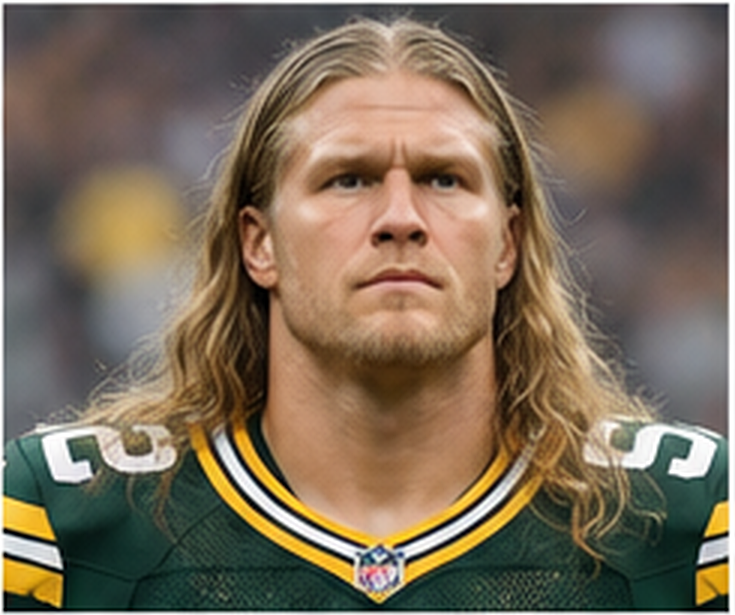
Images that appeared to show a very different-looking Clay Matthews spread quickly online, but questions about their authenticity turned the story into a lesson about AI, advertising, and social-media trust.
AI-generated illustrative image
A surprising image starts a viral discussion
Former NFL star Clay Matthews became one of the most searched sports names in the United States after surprising images of him spread online. In the pictures, the former Green Bay Packers linebacker appeared to have a very different face and body. Many social-media users immediately asked whether he had received plastic surgery. Others made jokes or shared the pictures without checking where they came from. The discussion grew quickly because Matthews has been famous for many years and fans remember his long blond hair, strong build, and well-known look from his football career.
Then people questioned whether the pictures were real
Soon after the images became popular, users began to notice signs that the pictures might not be normal photographs. Reports said the posts were connected to advertising and that the images appeared to have been created or strongly changed with artificial intelligence. A Community Note on X also challenged the idea that the pictures showed Matthews’s real appearance. Recent images of him looked much more normal. This changed the story. Instead of being only celebrity gossip about possible surgery, it became a discussion about how easy it is to create a believable false image and make it travel across social media.
Why AI images can fool people
AI image tools have improved quickly. They can make realistic faces, bodies, clothing, backgrounds, and lighting. A person may look almost exactly like a real celebrity, even when the scene never happened. Small mistakes can still appear, but many people do not stop to examine an image closely. They may see a post for only a few seconds and then share it. If a famous media account or large social page posts the image, people may assume it has already been checked. This is one reason false or altered images can become popular before anyone proves where they came from.
The problem with fast reactions
The Clay Matthews story shows how social media rewards fast reactions. A surprising picture creates emotion. People comment because they are shocked, amused, or confused. That activity tells social-media systems that the post is interesting, so the platforms may show it to more people. By the time someone asks whether the image is real, millions of users may already have seen it. Even if a correction comes later, the first impression can stay in people’s minds. This is especially serious when fake images affect a person’s reputation, health, relationships, career, or public image.
How users can check suspicious pictures
People do not need to be technology experts to be more careful. First, they can look for the original source of an image instead of trusting a repost. Second, they can check whether trusted news organizations have published the same picture. Third, they can look for labels such as “AI-generated,” “advertisement,” or “sponsored.” They can also compare the image with recent verified photographs. Strange hands, unusual skin, repeated background details, or unnatural lighting can be warning signs, although modern AI can avoid many of these mistakes. The safest habit is simple: do not treat a viral image as proof until its source is clear.
Why the story matters beyond one football star
Matthews is a public figure, so his name helped the images travel. But the same technology can affect ordinary people. Someone can create a false picture of a teacher, business owner, politician, family member, or student. A fake image can be used for a joke, a scam, an advertisement, or a political message. As AI tools become easier to use, media literacy becomes more important. Media literacy means understanding how information is created, checking sources, and thinking before sharing. This skill is now necessary for anyone who uses social media.
A simple lesson from a strange trend
The most useful lesson from the Clay Matthews trend is not whether he changed his appearance. The bigger issue is how quickly people believed that an unusual image might be real. The story shows a new problem in online life: seeing is no longer always believing. A photograph used to feel like strong proof. Today, an image may be a real photo, an edited photo, a computer-generated picture, or a mix of all three. Social-media users will need stronger checking habits. The next viral picture may look even more convincing, so careful reading and source checking will matter more than ever.
Word count: 683 • Sources checked: Just Jared; Hollywood Life; other entertainment reporting on the viral images
Prepared for TodayTop10.com. Facts reflect reporting available on September 5, 2026; fast-moving stories may develop further.
SPORTS / COLLEGE FOOTBALL • STORY 3 OF 10