
What is happening
Tension between Iran and the United States is rising again around the Strait of Hormuz, one of the most important sea routes in the world. On Tuesday, Iranian officials warned that the country could increase military and economic pressure in the Gulf. Iran also said it had used a newer ballistic missile against U.S. warships near the strait. The United States said its ships were not hit.
The latest warning came after several days of new attacks in a conflict that has continued for about six months. U.S. forces recently attacked Iranian oil tankers, while Iran answered with missile and drone operations. The pattern has worried governments and shipping companies because each new attack can quickly affect oil, gas, trade, and security far beyond the Middle East.
Iran says it plans to announce a new restricted maritime zone in the Gulf. It also says it wants to show ships a new route through the Strait of Hormuz. Iranian officials have suggested that vessels entering the restricted area without permission could face penalties from Iran. The details are still unclear, and it is not known how such a zone would be enforced.
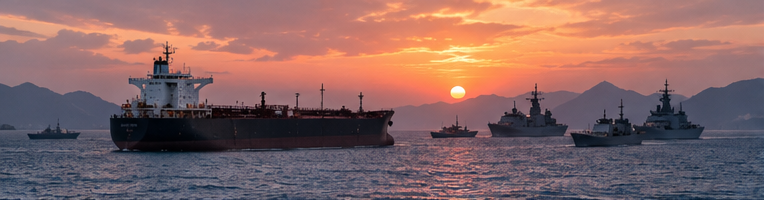
The Strait of Hormuz is narrow, but it is extremely important. It connects the Persian Gulf with the Gulf of Oman and the Arabian Sea. Before the current war, about one-fifth of the world's oil and liquefied natural gas shipments passed through this waterway. Oil and gas from Saudi Arabia, the United Arab Emirates, Qatar, Kuwait, Iraq, and Iran often move through or near the strait on the way to customers in Asia, Europe, and other regions.
Why the Strait matters
When shipping becomes dangerous, companies may slow their vessels, change routes, delay cargo, or pay more for insurance. These extra costs can later reach ordinary people. Fuel prices can rise. Air travel and road transport can become more expensive. Companies that use oil and gas to make products may also face higher costs. This is why a military event in a small area of water can become an economic story around the world.
Iranian state media said the missile used near U.S. ships was the Qassem Basir. Iran describes it as an improved weapon that can move in ways that make it harder to stop. Tehran also says it can work even when an enemy tries to block or confuse its electronic systems. These claims are difficult to check independently during a conflict. U.S. officials have said their warships avoided the reported attacks.
The crisis is also connected to Iran's wider struggle with U.S. sanctions and military pressure. Washington says it wants to stop Iran from developing a nuclear weapon and reduce its ability to threaten neighboring countries. Iran says the United States is attacking its economy and sovereignty. The two sides remain far apart, and diplomatic efforts have not yet produced a stable agreement.
Another danger is that the conflict could spread to other countries. Iran has close relationships with armed groups in several parts of the region. On the same day as the new Iranian warning, Yemen's Houthi movement carried out attacks on Saudi Arabia, according to the Saudi-led coalition. This added to fears that a U.S.-Iran confrontation could become a wider regional war.
What comes next
For energy markets, the main question is whether ships can continue to move safely through the Strait of Hormuz. Traffic has already slowed at different points during the crisis. Traders watch every military statement because even the threat of closing or restricting the strait can push oil prices higher. Countries that import most of their energy are especially worried about sudden price increases.
There is also a risk of misunderstanding. A missile that lands close to a warship, a drone that is wrongly identified, or an attack on a commercial tanker could lead to a much larger response. Military forces from several countries operate in and around the Gulf, so leaders face pressure to protect their people while also avoiding actions that could start a bigger war.
In the coming days, attention will focus on whether Iran actually announces the new restricted zone, how the United States responds, and whether commercial shipping slows further. Diplomats will also look for signs that the two sides are ready to return to serious talks. For the rest of the world, the hope is simple: keep the waterway open, protect civilian ships, and prevent another round of attacks from becoming a broader conflict.
Source: Reuters — reporting published September 7–8, 2026.
02 EUROPE