
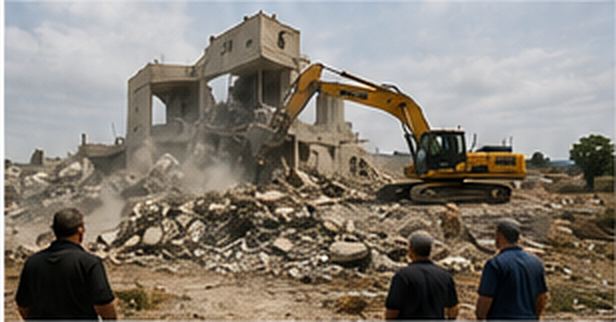
Israeli forces demolished Palestinian homes in the occupied West Bank as European Union ministers considered possible action on goods from Israeli settlements.
AI-generated illustration for this article.
Israeli forces have demolished more Palestinian homes in the occupied West Bank. The latest demolitions were reported in areas including Birzeit and Nablus. At the same time, European Union ministers are discussing possible new action against goods that come from Israeli settlements in the West Bank. The two developments have increased attention on a conflict that has already caused great tension and suffering.
The West Bank is an area between Israel and Jordan. Israel captured it in the 1967 Middle East war. Palestinians want the West Bank, East Jerusalem, and Gaza to form a future independent Palestinian state. Israel has built many settlements in the West Bank, where hundreds of thousands of Israeli settlers now live. Most of the international community considers these settlements illegal under international law, while Israel disputes some of these legal views.
Home demolitions are a major issue for Palestinians. Israeli authorities sometimes say buildings were built without the required permits. Israel also carries out some demolitions for security reasons, including homes connected to people accused of attacks. Palestinians and human rights groups say the permit system is very difficult for Palestinians and that demolitions can force families from their land.
In the latest cases, families saw homes damaged or destroyed by heavy machines. Losing a home is not only a financial problem. A house may contain years of family history, personal items, and memories. When a home is demolished, people may suddenly need a new place to sleep, store their belongings, and keep children safe.
Tension in the West Bank has grown in recent years. Israeli military operations, Palestinian attacks, arrests, settlement growth, and violence by some settlers have all increased fear. Palestinians say they face stronger pressure on their land and movement. Israelis say they face real security threats and that military action is needed to prevent attacks.
European governments are now debating how they should respond. One idea is to place stronger limits on products made in Israeli settlements. Supporters of such action say trade should not support settlements on occupied land. They believe economic pressure could help protect international law and push both sides toward a political solution.
Other governments are more careful. They may worry that sanctions or trade restrictions could make diplomatic talks harder or create political divisions inside Europe. EU countries do not always agree on Israel and Palestine, so any strong common action can be difficult to approve.
The discussion is also important because Europe is a major trading partner for Israel. Even a limited change in rules for settlement goods can carry political meaning. It sends a message about how European governments see the status of the West Bank. However, such measures do not directly solve the conflict or immediately improve daily life for families on the ground.
The main political problem remains the lack of a lasting agreement between Israelis and Palestinians. Many international governments continue to support a two-state solution, meaning an Israeli state and a Palestinian state living next to each other in peace and security. But years of failed talks, violence, settlement growth, and deep distrust have made this goal harder to reach.
For Palestinians whose homes were demolished, the issue is immediate and personal. They need shelter and support now. For Israelis, security concerns remain a central part of the debate. For European leaders, the question is how to use political and economic pressure without making the situation worse.
The latest demolitions and EU discussions show that events in the West Bank continue to affect international politics. They also show how difficult the conflict is. Any long-term solution will need to deal with security, land, rights, settlements, movement, and the future political status of the Palestinian territories. Until then, families on both sides will continue to live with uncertainty and fear.
Fact-checked with current reporting published September 1, 2026, including AP-linked coverage and European policy reporting. Article length: 629 words.