Deadly strikes in the south
Israeli strikes on southern Lebanon killed at least 12 people on Monday, including two children, according to Lebanon's health ministry. The attacks have increased fear that fighting between Israel and Hezbollah could grow again after a ceasefire was meant to reduce violence earlier this year.
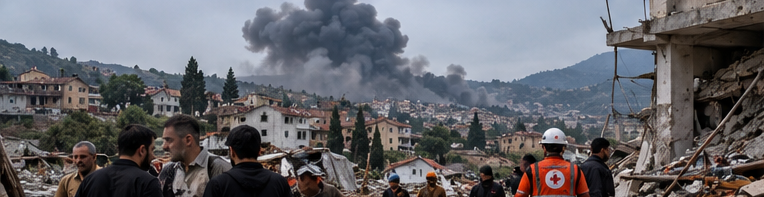
The deadliest strike hit the area of Kfar Rumman in southern Lebanon. A residential building was badly damaged. Rescue teams used heavy machines to search through concrete and broken walls. Reuters reporters at the scene saw schoolbooks among the rubble, a painful sign that children and families were living close to the area that was struck.
The Israeli military said it had targeted people who were moving weapons. Lebanese officials and residents described civilian deaths and damage. As in many conflicts, the two sides give different explanations of what happened, and some details can be difficult to confirm immediately.
The attack came after several days of rising tension. Israel and Hezbollah had fought a major round of conflict before a ceasefire in June. A ceasefire does not always mean every military action stops at once. It usually creates rules that are meant to reduce attacks and give diplomats time to solve larger problems. When one side says the other side has broken the rules, the risk of new fighting increases.
A fragile ceasefire
Hezbollah is a powerful Lebanese armed and political group. It has long had support from Iran and has fought Israel several times. Israel says Hezbollah's weapons near its northern border are a direct security threat. Hezbollah says it is defending Lebanon and resisting Israeli military action.
Southern Lebanon has paid a high price during repeated periods of conflict. Many villages are close to the Israeli border. Families may leave during heavy fighting and return when conditions become calmer. Repeated displacement is difficult because people can lose homes, jobs, farms, schools, and access to medical care.
Children are especially affected. Even when they are not physically injured, they may hear explosions, see damaged buildings, or lose friends and relatives. Schools can close or move to temporary locations. Parents may avoid sending children to class if roads or neighborhoods feel unsafe.
The new deaths are also a challenge for Lebanon's government. Lebanon has faced political and economic problems for years. The state has limited resources to repair buildings, support displaced families, and rebuild damaged public services. A larger war would place even more pressure on hospitals, electricity systems, roads, and local authorities.
What could happen next
Israel also faces strong security concerns in its northern communities. During past fighting, many Israeli residents near the Lebanese border were moved to safer areas. The Israeli government says it wants to make sure that armed groups cannot attack those towns with rockets, drones, or fighters.
This creates a difficult cycle. Israel may carry out strikes because it believes Hezbollah is moving weapons or preparing attacks. Hezbollah may answer because it sees Israeli strikes as aggression. Each response can then become the reason for another response. Without strong political control, the cycle can move from limited strikes to a much larger war.
International governments are watching closely. The United States, European countries, the United Nations, and regional states have all tried at different times to reduce tension between Israel and Lebanon. Their main concern is that another full war would cause large civilian losses and could connect with the wider conflict involving Iran, the United States, and other armed groups.
There are also questions about the ceasefire itself. If both sides continue to accuse each other of violations, diplomats may need new monitoring rules or stronger guarantees. A ceasefire can only last if each side believes the other side will follow it. Local people also need to feel safe enough to return home and rebuild.
For the families of those killed, however, these larger political questions are not the first concern. They are dealing with immediate loss. Funerals, injured relatives, destroyed homes, and fear of more attacks are the reality on the ground.
The next few days will show whether Monday's strikes remain a limited event or become the start of a new military campaign. Any Hezbollah response will be closely watched, as will further Israeli operations. The most important goal should be to prevent more civilian deaths and keep communication open between the sides.
Southern Lebanon has experienced many rounds of violence. Each new attack can reopen old wounds and make future peace harder. A lasting calm will require more than a short pause in fighting. It will require clear security arrangements, respect for civilian life, and political work that gives communities on both sides of the border a reason to believe that another war can be avoided.
Source: Reuters — reporting published September 7–8, 2026.
06 WEATHER