A federal judge extended an order stopping a new Postal Service rule from taking effect only weeks before the 2026 midterm elections.
At a glance: A federal judge extended an order stopping a new Postal Service rule from taking effect only weeks before the 2026 midterm elections.
The court decision
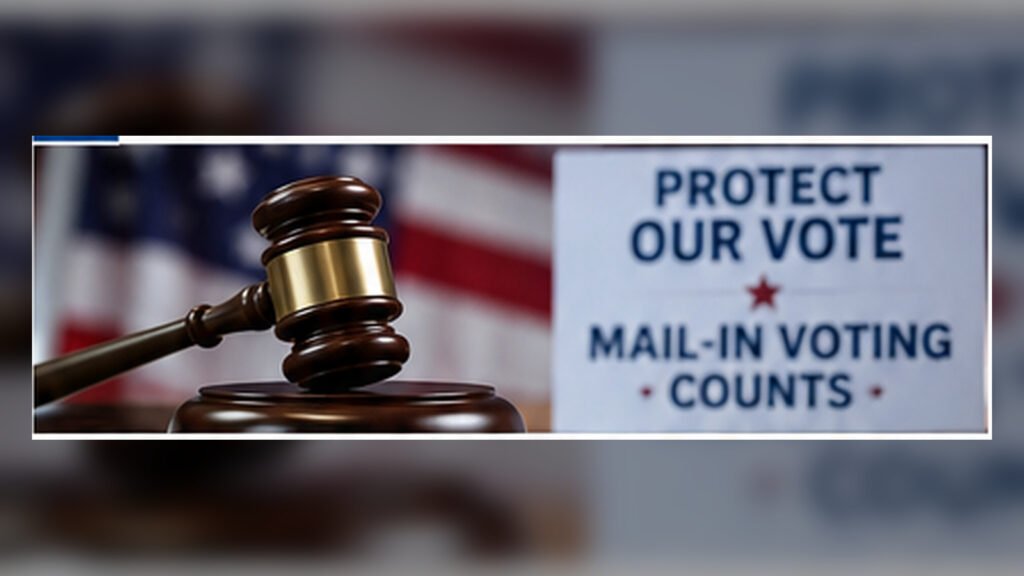
A federal judge in Boston has extended a block on a new U.S. Postal Service rule that would make major changes to mail-in voting ahead of the November 2026 congressional elections. The rule was created to carry out part of an executive order signed by President Donald Trump in March.
U.S. District Judge Indira Talwani said the rule could not take effect while the legal challenge continues. The case was brought by Democratic-led states and voting-rights groups. The Trump administration quickly appealed the ruling, so the legal fight is not over.
The timing is especially important. Some election offices have already started sending ballots, and thousands of local election authorities are preparing for voting. Changing the system only weeks before Election Day could require new printing, new computer systems, new instructions, and new training.
What the Postal Service rule would do
Under the rule, states would have to give the Postal Service lists of people receiving mail ballots. Outgoing and returning ballot envelopes would also need special, unique barcodes. The Postal Service could refuse to handle ballots that did not meet the new requirements or were connected to voters who were not on the submitted lists.
Supporters of tighter rules say stronger controls could improve confidence and help make sure ballots are connected to eligible voters. Trump has criticized voting by mail for years and has argued that the system needs more security.
Critics say the new requirements could prevent legal votes from being counted because of printing mistakes, data problems, or technical failures. They also argue that election rules are mainly controlled by states and by laws passed through Congress, not by an executive order or a new postal regulation.
Why the judge said no
Judge Talwani wrote that Congress has not given the Postal Service broad authority to create voting rules. She said only federal laws passed by Congress can override state authority in this area. She also warned that the new system could create chaos so close to the election.
One of the biggest practical problems is scale. The United States has about 10,000 election jurisdictions. Local officials would need to redesign ballot materials, print new envelopes, and send voter information into a Postal Service system. The judge said it was not realistic to expect all of that work to happen smoothly in a short period.
Voting-rights groups also said they were unsure what advice to give voters. If people are legally allowed to vote by mail but fear that a technical problem could stop delivery, some may avoid using the option. The court viewed that risk as serious enough to justify blocking the rule for now.
What happens next
The administration has appealed and has also asked the U.S. Supreme Court to become involved. This means the final rules for the election could still change. Election officials, campaigns, and voters will be watching the courts closely.
Mail voting is used in every state in some form. Many states allow any voter to request a mail ballot without giving a special reason, while some states conduct elections largely or entirely by mail. Because the systems are different, a single national postal rule can have very different effects from one state to another.
The political debate will also continue. Trump and many supporters say changes are needed to protect election security. Opponents say the new rule risks blocking lawful ballots and represents federal interference in state-run elections. Courts must decide the legal questions rather than the political arguments.
For voters, the safest approach is to follow official instructions from their state or local election office and pay attention to any court decisions that change those instructions. The ruling does not end mail voting. Instead, it temporarily stops the new Postal Service restrictions while the larger constitutional and legal fight moves forward.
Editorial verification sources: Reuters, September 4-5, 2026; related federal court reporting.
08 BUSINESS