
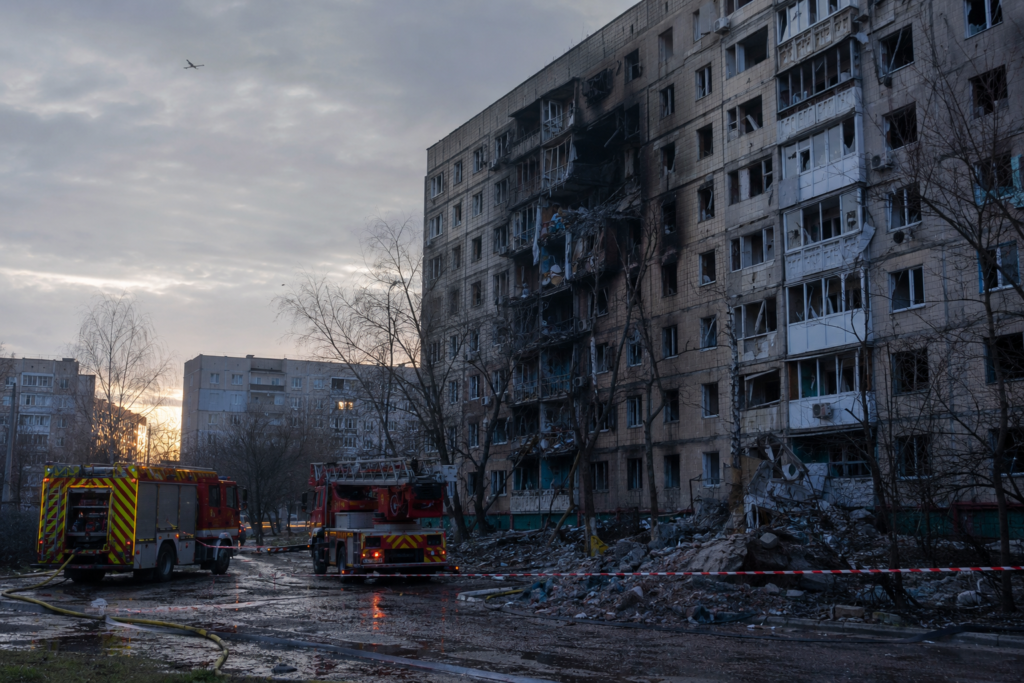
Repeated attacks have damaged homes and infrastructure while residents spend more nights in shelters.
AI-generated editorial illustration created for this article.
Russia has continued heavy drone attacks on Kyiv and nearby areas, placing Ukraine's capital under pressure for several days in a row. Ukrainian officials said people were wounded and homes, university buildings and other infrastructure were damaged. Earlier attacks in the same period killed residents in the Kyiv region. Air-raid alarms have repeatedly sent families into underground stations, parking areas and shelters. The attacks are part of a wider war that has continued for years and has changed daily life for millions of Ukrainians.
One important change is Russia's growing use of fast, jet-powered drones. These drones can be harder to detect and stop than older models. Russia also uses large numbers of slower drones to make Ukraine spend valuable air-defense missiles. When many drones arrive from different directions, defenders must decide which objects are the most dangerous. Even when air defenses destroy a drone, falling pieces can start fires or damage buildings below. This means people may still face danger after they hear an interception in the sky.
The human cost is not only measured by deaths and injuries. Residents may sleep badly for many nights because alarms can begin at any hour. Parents must wake children and move them to safer places. Hospitals need backup electricity, and emergency workers must travel while attacks continue. Businesses close or lose power, while public transport may stop. Students cannot always attend lessons. This long period of fear and interruption can harm mental health, especially for children, older people and those who have already lost relatives.
Ukraine says Russia is striking residential districts, railways and other civilian infrastructure. Russia says it targets places connected to Ukraine's military. In a modern city, however, military and civilian systems can be close together. Rail lines may carry both ordinary passengers and military supplies. Warehouses may serve shops as well as government needs. International humanitarian law requires all sides to distinguish between military targets and civilians and to avoid attacks expected to cause excessive civilian harm. Independent checks are often difficult while attacks are still happening.
Kyiv is asking its partners for more air-defense systems and interceptor missiles. Systems such as Patriot can stop some ballistic missiles, but they are expensive and supplies are limited. Smaller and cheaper weapons may be used against drones. Ukraine also uses mobile teams, electronic systems and fighter aircraft. No defense can stop every attack, especially when hundreds of objects are launched. This is why officials also focus on strong shelters, quick warnings, fire services and the fast repair of electricity and water networks.
The attacks have a wider political purpose as well. Russia may hope that constant danger will weaken public confidence and make Ukraine's partners tired of supporting the country. Ukraine tries to show that its society can continue to work and that outside support still matters. At the same time, Ukraine has attacked Russian oil, transport and military facilities. Both sides are trying to reduce the other's ability to fight. This cycle creates a risk that attacks will become larger and move into new areas.
The immediate question is whether Kyiv will face more days of continuous attacks. Residents will continue to follow official alarms and avoid windows during danger. Foreign governments will decide how much military and financial support to provide. A lasting end to the attacks would require a broader political agreement, but talks remain very difficult. Until then, emergency workers, doctors and ordinary citizens will carry much of the burden. Their ability to protect life does not remove the need for all sides to follow the laws of war and seek a path toward peace.
Source used for factual reporting: Reuters. Facts were current on September 3, 2026; developing stories may change.
WORLD NEWS / STORY 04