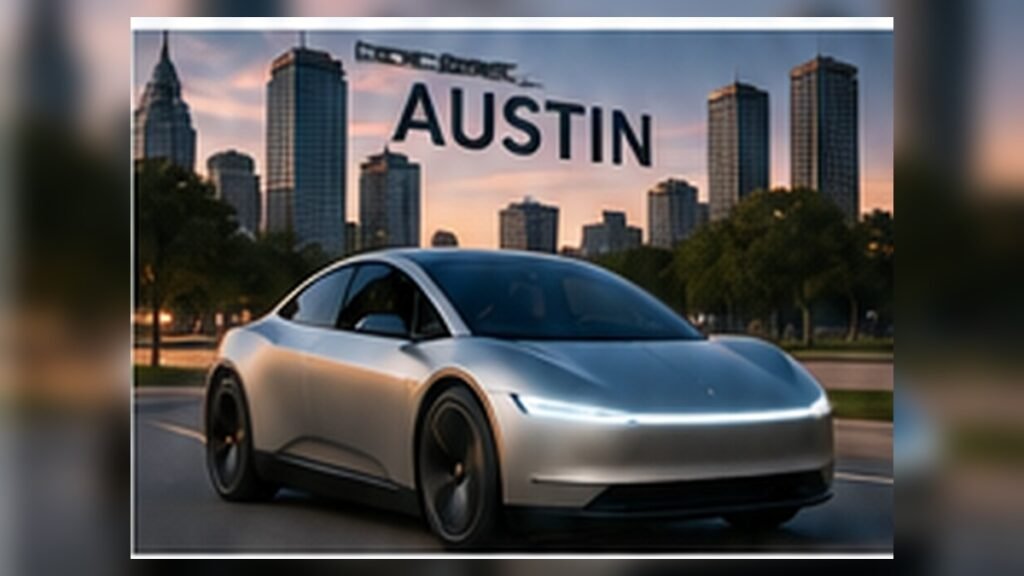
Tesla has started offering limited rides in its Cybercab robotaxis in Austin, Texas. The Cybercab is a small electric vehicle designed to drive without a human driver. It has no steering wheel and no pedals. Tesla hopes vehicles like this will become an important part of the future of transportation, but the launch is also receiving close attention from U.S. safety regulators.
The rides began in limited areas of Austin, according to reports published on September 3 and 4, 2026. Tesla has already been testing robotaxi services in the city, but the Cybercab is different from a normal Tesla car because it was built specifically for driverless use. Its design assumes that a person will not need to take control in the usual way.
The U.S. National Highway Traffic Safety Administration, known as NHTSA, said it is evaluating the rollout. NHTSA is the federal agency that works on vehicle safety. It can ask companies for information, study crashes, and create or enforce safety rules. A car with no steering wheel or pedals raises special questions because many existing vehicle rules were written for cars controlled by human drivers.
Tesla says autonomous driving could make transportation cheaper and more convenient. In the future, people might use an app to call a driverless car, ride to a destination, and leave without ever speaking to a driver. Supporters believe this could help people who cannot drive, reduce the cost of some trips, and make better use of vehicles that would otherwise sit parked for many hours.
However, the technology must be very reliable. A robotaxi needs to understand traffic lights, signs, pedestrians, bicycles, emergency vehicles, road construction, unusual weather, and the unpredictable actions of other drivers. Human drivers use judgment every second, often without thinking about it. An autonomous system must turn these situations into data and decisions quickly and safely.
Early reports from the Austin service showed that the rollout is still limited. Tesla is not yet offering Cybercab rides everywhere, and the number of vehicles is small compared with a normal city taxi system. This gives the company a chance to collect information and improve the service before trying to expand it.
The launch also shows the growing competition in driverless transportation. Other companies, including Waymo and Zoox, are developing or operating autonomous taxi services. Each company uses different technology and business plans. Tesla’s approach is especially important because it has a very large number of electric vehicles on the road and has spent years promoting its Full Self-Driving software.
Safety remains the central issue. If a robotaxi works correctly most of the time but makes a dangerous mistake in a rare situation, the result can still be serious. Regulators therefore want companies to show that their systems are safe in real traffic, not only in controlled tests. They also need clear rules for what happens when the vehicle has a problem.
Investors are watching closely because Tesla has said robotaxis could become a major part of its future business. The company faces strong competition in the electric vehicle market, so new services may be important for future growth.
For passengers in Austin, the Cybercab rollout is an early look at a possible future. Driverless cars may one day become normal, but the technology is still developing. The next steps will depend on safety results, public trust, regulation, and whether Tesla can make the service reliable enough to expand beyond a small test area.