
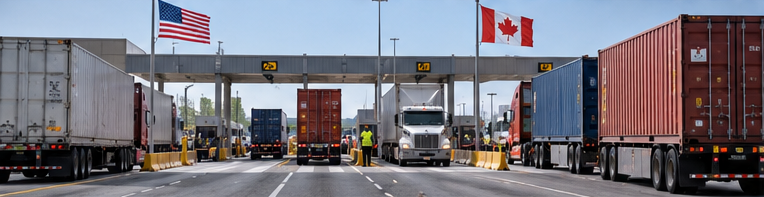
New tariffs take effect
Canada has introduced new tariffs on about $20 billion of goods from the United States, marking a fresh escalation in the long trade dispute between the two neighboring countries. The new measures took effect just after midnight on Tuesday after recent negotiations failed to produce an agreement.
The Canadian tariffs range from 15% to 50% and cover products such as steel, furniture, clothing, and electronics. A tariff is a tax placed on imported goods. When a country adds a tariff, companies importing those products usually have to pay more. Some of that extra cost may later be passed to consumers through higher prices.
Canada says the measures are a direct answer to U.S. tariffs on Canadian products. Prime Minister Mark Carney's government argues that Canada needs to defend its industries and create pressure for a better deal. U.S. officials have blamed Canada for the breakdown in talks, while Canadian officials say U.S. demands were too difficult to accept.
The dispute is important because the United States and Canada have one of the largest trading relationships in the world. They share a long border, and companies on both sides depend on each other for parts, food, energy, raw materials, and finished products. A car, for example, may include parts that cross the border several times before the vehicle is finished.
How tariffs reach businesses and families
This means tariffs can create complicated costs. A U.S. factory may use Canadian steel. A Canadian factory may use American electronic parts. If both countries add taxes at the border, the same supply chain can become more expensive in several places.
Businesses do not like uncertainty. If a company does not know what the tariff rate will be next month, it may delay investment or hiring. It may also try to find a new supplier in another country. Such changes can protect a company from future tariffs, but they can also be expensive and slow.
Consumers may notice the effects in shops. Furniture, clothing, appliances, electronics, or building materials can become more expensive if import costs rise. The effect is not always immediate because companies may have products already stored in warehouses. But if tariffs continue for months, higher costs can become easier to see.
Farmers are also worried. Canada and the United States trade large amounts of food. Agricultural groups fear that a cycle of new tariffs and counter-tariffs could hurt exports. A farmer can lose a market quickly if a buyer decides that a product from another country is cheaper.
Can the two countries step back?
One Canadian trade representative warned about an escalatory spiral. This means one side adds a tariff, the other side answers, and then the first side responds again. Each step may feel like a defense, but the final result can be higher prices and less trade for both countries.
The dispute also creates questions about the U.S.-Mexico-Canada Agreement, often called USMCA. This trade agreement replaced the older NAFTA deal and sets many rules for business across North America. The agreement faces regular reviews. If political relations become worse, companies may worry that some of the rules they depend on could change.
The trade fight is not only about money. It is also connected to national politics. Leaders in both countries want to show voters that they are protecting jobs and national interests. Tariffs can be popular when people believe foreign competition is unfair. However, tariffs can become unpopular if prices rise or companies cut jobs because their costs are too high.
Some industries may benefit from protection. A Canadian company that competes with U.S. imports may find it easier to sell products at home if American goods become more expensive. But another Canadian company that needs U.S. machinery or parts may face higher costs. This is why trade policy can help one group and hurt another at the same time.
There is still room for negotiation. The United States and Canada have solved major trade disagreements before because their economies are so closely connected. Business groups on both sides often push governments to reach compromises. They know that a long trade war can damage investment and make North American companies less competitive against firms from Europe or Asia.
The next important question is whether officials return to serious talks soon. If they do, the tariffs could become bargaining tools that are reduced later. If talks remain frozen, more products could be added to tariff lists and the dispute could spread to other areas.
For ordinary people, the issue may seem technical, but the effects are simple: prices, jobs, and business decisions. Two countries that have traded closely for generations are now testing how much economic pressure they are willing to place on each other. The longer the dispute continues, the harder it may become to return to the easy movement of goods that many companies and families once took for granted.
Source: Reuters — reporting published September 7–8, 2026.
08 EUROPE