
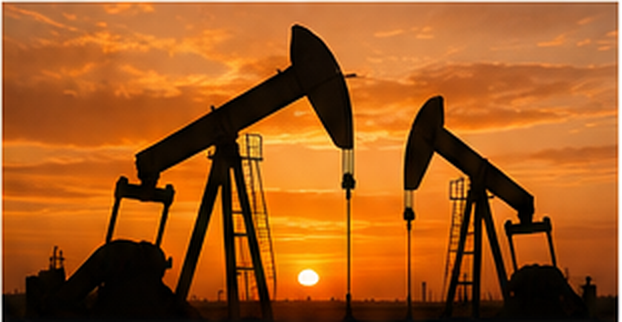
Brent crude moved above $91 a barrel as renewed fighting between the United States and Iran increased fears about oil supplies from the Middle East.
AI-generated illustration for this article.
Oil prices rose on Tuesday as tension in the Middle East increased again. Brent crude, an important world oil price, moved above 91 dollars a barrel. Traders became worried after the United States and Iran exchanged attacks. Their main fear is that a wider conflict could make it harder to produce or transport oil from one of the world's most important energy regions.
The Middle East produces a large share of the oil used around the world. Countries such as Saudi Arabia, Iran, Iraq, Kuwait, and the United Arab Emirates are major producers. A lot of this oil is sent to other countries by ship. Because the region is so important, even a small risk of serious disruption can quickly move prices in global markets.
Oil prices do not rise only when supply is already lower. They can also rise when traders believe there may be a problem in the future. Companies that buy and sell oil try to understand what might happen next. If they think ships, ports, pipelines, or oil fields could be in danger, they may be willing to pay more now. This is sometimes called a risk premium.
One important place is the Strait of Hormuz. It is a narrow waterway between Iran and Oman. A very large amount of oil and gas passes through this area every day. If ships could not travel safely through the strait, the effect on world energy markets could be serious. This is why military events near the Gulf often have an immediate effect on oil prices.
Higher oil prices can affect ordinary people, not only energy companies. Oil is used to make gasoline, diesel, jet fuel, plastics, chemicals, and many other products. Trucks use fuel to move food and goods. Ships carry products between countries. Airplanes need large amounts of fuel. When energy becomes more expensive, transport and production costs can also rise.
These higher costs can later reach consumers. A family may pay more at a fuel station. Airlines may increase ticket prices. Companies may charge more for goods because delivery costs are higher. Farmers also use fuel for machines and transport, so food prices can be affected. The change does not happen at the same speed in every country, but oil prices are important for the wider economy.
Governments and central banks are also watching the situation because expensive energy can increase inflation. Inflation means that prices for many goods and services rise over time. If inflation stays high, central banks may keep interest rates high or raise them. Higher interest rates make loans more expensive for families and businesses, which can slow economic growth.
However, oil prices can move down as quickly as they move up. If the United States and Iran reduce their military activity, markets may feel safer. Prices could also fall if oil-producing countries increase supply or if global demand becomes weaker. For this reason, traders are watching both political news and economic data very closely.
The latest rise above 91 dollars does not mean oil will stay at that price. Markets can change every hour. Still, the move is important because it shows how worried investors are about the Middle East. It also shows that conflicts in one region can affect people thousands of kilometers away through fuel prices, transport, and inflation.
For now, the biggest question is whether the fighting will stay limited or become wider. A wider conflict could create more danger for energy infrastructure and shipping. A calmer situation could reduce some of the fear in markets. Until there is more certainty, oil prices may continue to move sharply as traders react to each new political and military development.
Fact-checked with Reuters market reporting published September 1, 2026. Article length: 610 words.
Leave a Reply