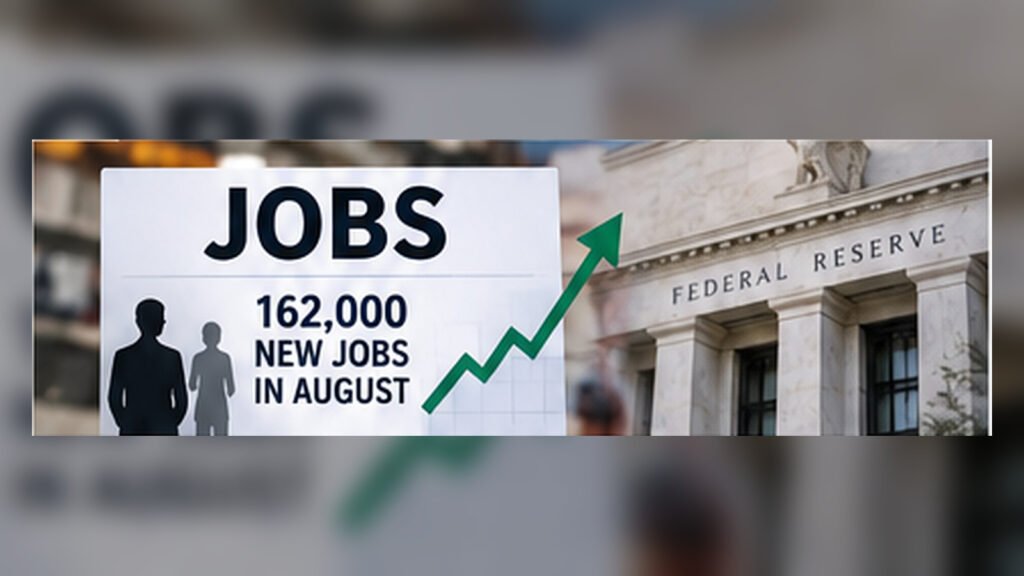
Employers added 162,000 jobs in August, much more than expected, while unemployment stayed at 4.1 percent.
At a glance: Employers added 162,000 jobs in August, much more than expected, while unemployment stayed at 4.1 percent.
A stronger report than expected
The U.S. labor market surprised economists in August. Employers added 162,000 jobs, according to the latest government employment report. That was far above the roughly 56,000 jobs economists surveyed by Reuters had expected. The unemployment rate stayed at 4.1 percent.
The report was important because job growth had looked weaker in recent months. August showed the largest monthly job increase in five months. The labor force also grew, meaning more people were working or looking for work. The labor force participation rate increased to 61.6 percent from 61.4 percent in July.
Some of the improvement came from leisure and hospitality, a sector that includes restaurants, hotels, and entertainment businesses. Local government education also improved after earlier weakness. At the same time, the report was not perfect. Long-term unemployment increased, showing that some people are still having difficulty finding work.
Why jobs affect interest rates
A strong jobs report is usually good news. More jobs mean more families receive income, and businesses may feel confident enough to hire. However, the Federal Reserve has another problem to consider: inflation.
The Fed uses interest rates to influence how quickly the economy grows. Higher rates make borrowing more expensive for homes, cars, credit cards, and businesses. This can reduce spending and help slow inflation. Lower rates make borrowing cheaper and can support economic growth.
When the labor market is very weak, the Fed may want lower rates to help businesses and workers. When jobs are strong and inflation remains a concern, officials may feel they have more room to keep rates high or even raise them. That is why the August employment report increased market discussion about a possible rate hike at the Fed's September meeting.
Markets and politics react
Financial markets reacted quickly. Stronger job growth led investors to increase expectations that the Fed could raise rates. Treasury yields and the U.S. dollar moved higher, while stocks faced pressure as investors thought about the possibility of tighter financial conditions.
President Trump has taken a different view. He has called for lower interest rates, arguing that cheaper borrowing would help the economy. This creates a clear public disagreement between the White House's preference for lower rates and the concerns of some central bank officials who remain focused on inflation.
The Federal Reserve is designed to make monetary policy decisions independently. Its officials look at many types of data, including inflation, jobs, wages, consumer spending, and financial conditions. One strong jobs report does not automatically mean rates will rise, but it can change the balance of the debate.
What this means for ordinary Americans
Interest-rate decisions can affect daily life. If rates rise, mortgage costs can remain high, car loans can become more expensive, and businesses may delay investment. Credit-card interest can also stay costly. On the other hand, savers may receive better returns on some bank deposits.
A strong labor market can help workers because companies need employees and may compete for staff. But if strong demand adds to inflation, higher prices can reduce the value of those wages. This is the difficult balance the Fed is trying to manage: keeping employment healthy without allowing prices to rise too quickly.
The next major economic reports will be closely watched, especially inflation data. If inflation shows signs of cooling, the Fed may decide that no increase is needed. If inflation stays strong while jobs remain healthy, support for higher rates may grow.
For now, the August jobs report has changed the conversation. Instead of focusing mainly on labor-market weakness, investors and policymakers are again asking whether the economy may be strong enough for the Fed to keep a tighter policy. That makes the next Federal Reserve meeting one of the most important economic events of the month.
Editorial verification sources: Reuters, September 4, 2026; U.S. Labor Department employment report as reported by Reuters.
06 POLITICS